Skopje Airport to Bitola Transfer Service
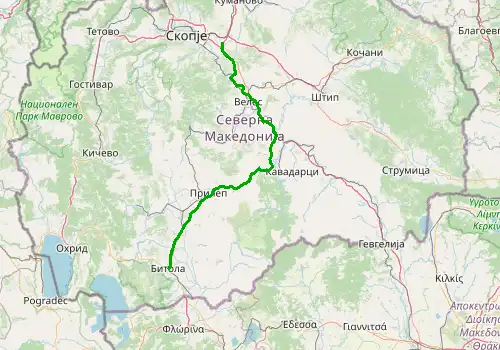
Travelling to Bitola from Skopje Airport (SKP)? Begin your journey in comfort with our professional Skopje Airport to Bitola transfer service. We provide direct private transportation from Skopje Airport to Bitola -- 155 kilometres in approximately 164 minutes -- with a professional driver confirmed and waiting at arrivals.
Why Choose Our Skopje Airport to Bitola Taxi Service?
Skopje Alexander the Great Airport connects arriving visitors to the statue-filled capital Skopje, the Painted Mosque of Tetovo, the volcanic towers of Kratovo, the ski slopes of Mavrovo National Park, the double-UNESCO shores of Ohrid, the poetry capital of Struga, the consular elegance of Bitola, and the youthful energy of Pristina. Our Skopje Airport to Bitola private transfer delivers you directly -- confirmed, comfortable and door-to-door.
Premium Service Features:
- Meet & Greet Service: Your driver waits at arrivals with a personalised name sign
- Flight Monitoring: We track your flight automatically and adjust for any delay
- Fixed Transparent Pricing: Know your exact cost upfront -- no meter, no surcharges
- Modern, Comfortable Vehicles: Air-conditioned, GPS-equipped fleet with full luggage capacity
- Free Cancellation: Cancel up to 48 hours before your transfer at no charge
- 24/7 Customer Support: Our team is available around the clock
- Child Safety Seats: Available on request at no extra charge
- English-Speaking Drivers: Clear communication and local knowledge throughout
Other Transport Options from Skopje Airport to Bitola
- Bus (Skopje to Bitola, regular intercity services): Regular buses connect Skopje to Bitola in approximately 2h30m-3h -- connection from airport required.
- Private Transfer (Direct): Our direct private transfer from Skopje Airport to Bitola takes approximately 164 minutes via A1/E65. Fixed price, door-to-door.
- Car Rental: Car hire at Skopje Airport for Bitola, Heraclea and Pelister is practical. Approximately 150 minutes.
- Taxi: Taxis from Skopje Airport to Bitola cost approximately 6,000-8,000 MKD. Our private transfer provides a confirmed fixed price.
Our private transfer from Skopje Airport to Bitola provides the most direct, comfortable and reliable connection -- door to door, fixed price, no connections.
About Bitola
Bitola is the most historically distinguished, most architecturally elegant and most culturally sophisticated city in southern North Macedonia -- a city of 74,000 inhabitants 155km southwest of Skopje Airport near the Greek border in the Pelagonia plain, whose extraordinary combination of the Sirok Sokak (the most elegant and most beautifully preserved 19th-century urban promenade in North Macedonia -- the 'Wide Street', a pedestrian boulevard lined with the most imposing and most completely intact late Ottoman and early 20th-century townhouses in the country, the most aristocratic single urban street in North Macedonia, Bitola having been one of the most cosmopolitan and most diplomatically important cities in the late Ottoman Empire -- home to 18 foreign consulates in 1900, the most consulate-dense provincial city in the Ottoman Balkans, earning the title 'City of Consuls', the city where Mustafa Kemal Ataturk -- the founder of modern Turkey -- attended military school, the most consequential single educational connection in the history of Ottoman-Turkish transition to modernity) and the Heraclea Lyncestis Archaeological Site (the most important Roman and early Christian archaeological site in North Macedonia -- the ancient city founded by Philip II of Macedon, father of Alexander the Great, in the 4th century BCE, the most directly Macedonian-royal-connected archaeological site in the country, its extraordinary early Christian floor mosaics -- the most completely preserved Roman-era floor mosaic programme in North Macedonia, the most magnificent single collection of ancient mosaic art in the country -- and the Roman theatre the most atmospherically impressive ancient entertainment venue in North Macedonia) give it a heritage of exceptional civilisational depth.
Bitola's most important contemporary identity is its role as the most caffeinated and most leisured city in North Macedonia -- the city with the highest cafe density per capita in the country, the most relaxed and most sociable urban culture in the Macedonian interior, the most genuinely Mediterranean pace of life of any Macedonian city, a temperamental inheritance of the cosmopolitan late Ottoman atmosphere that made it the most fashionable provincial city in the western Balkans at the turn of the 20th century. The Bitola Museum (the most important historical collection in southern North Macedonia, the most complete archive of the consular and Ottoman heritage of the city), the Yeni Mosque (the most important and most architecturally distinguished Ottoman mosque in Bitola, one of the finest 16th-century mosque interiors in the Macedonian provincial heritage) and the Pelister National Park (20km west -- the most biodiverse and most completely forested national park in southern North Macedonia, Pelister peak 2,601m -- the third highest mountain in the country, the most important Molika pine habitat in the Balkans, the Molika -- the Macedonian pine, Pinus peuce -- the rarest and most locally endemic conifer in the Balkans, the most ecologically significant tree species in Macedonian national park heritage) give the city a cultural and natural depth of extraordinary breadth.
Important Transfer Information
City of Consuls -- 18 Foreign Consulates in 1900, Most Diplomatically Important Provincial City in Late Ottoman Balkans, Ataturk's Military School City: Bitola's identity as the 'City of Consuls' (18 foreign consulates in 1900 -- the most consulate-dense provincial city in the Ottoman Balkans, the most diplomatically important late Ottoman provincial centre in North Macedonia, the city where Ataturk attended military school -- the most consequential single educational connection in Ottoman-Turkish history) and the Sirok Sokak (the most elegant 19th-century urban promenade in North Macedonia) give the city a cosmopolitan heritage unique in the Macedonian interior.
Heraclea Lyncestis -- Founded by Philip II of Macedon (Father of Alexander the Great), Most Important Roman Site in North Macedonia, Most Magnificent Ancient Floor Mosaics in the Country: The Heraclea Lyncestis archaeological site (founded by Philip II of Macedon in the 4th century BCE -- the most directly royal-Macedonian-connected ancient site in the country, the most important Roman and early Christian archaeological park in North Macedonia, its floor mosaics the most completely preserved and most magnificent Roman-era mosaic programme in the country) gives Bitola a classical heritage of world archaeological significance directly linked to the most famous dynasty in ancient Macedonian history.
A1/E65 South Macedonia Transfer -- 164 Minutes to the City of Consuls: The transfer from Skopje Airport to Bitola takes approximately 164 minutes via A1 and E65 south -- through the Macedonian plain and the Pelagonia valley to the most elegant and most historically cosmopolitan city in the south of the country.
Book Your Transfer Now
Secure your comfortable, reliable journey from Skopje Airport to Bitola with JamTransfer today.
Visit JamTransfer.com for transfers from Skopje Airport throughout North Macedonia and the region.
Frequently Asked Questions
· If a transfer is canceled less than 36 hours prior to a transfer time, we will keep the prepaid amount and a refund will not be processed
· The refund process will not be executed for cancellations received less than 36 hours before the scheduled transfer time. In these situations, we will email you a cancellation note that can be used in order to settle the costs from your tour operator, airline, or travel insurance company
· If a flight is delayed for more than an hour, we would need to check our availability first
· Please, keep in mind if we are unable to complete a transfer in which a flight is delayed for more than an hour, Jam Transfer is not responsible if a transfer was not completed and will act in accordance with our Terms and Conditions