Osijek Airport to Vukovar Transfer Service
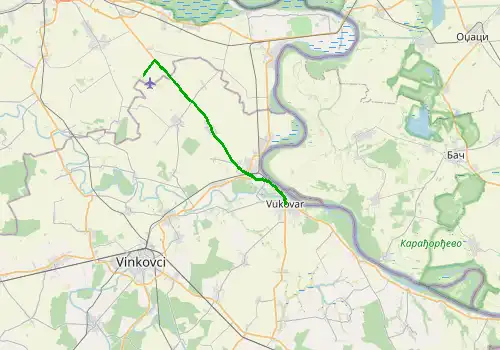
Travelling to Vukovar from Osijek Airport (OSI)? Begin your journey in comfort with our professional Osijek Airport to Vukovar transfer service. We provide direct private transportation from Osijek Airport to Vukovar -- 24 kilometres in approximately 30 minutes -- with a professional driver confirmed and waiting at arrivals.
Why Choose Our Osijek Airport to Vukovar Taxi Service?
Osijek Airport serves the entire eastern Croatian and cross-border Pannonian region -- from the Baroque fortress quarter of Osijek and the wartime memorial of Vukovar, to the ancient city of Vinkovci, the cathedral city of Đakovo, the wine city of Ilok, and across the borders to Pécs, Novi Sad and Szeged. Our Osijek Airport to Vukovar private transfer delivers you directly -- confirmed, comfortable and door-to-door.
Premium Service Features:
- Meet & Greet Service: Your driver waits at arrivals with a personalised name sign
- Flight Monitoring: We track your flight automatically and adjust for any delay
- Fixed Transparent Pricing: Know your exact cost upfront -- no meter, no surcharges
- Modern, Comfortable Vehicles: Air-conditioned, GPS-equipped fleet with full luggage capacity
- Free Cancellation: Cancel up to 48 hours before your transfer at no charge
- 24/7 Customer Support: Our team is available around the clock
- Child Safety Seats: Available on request at no extra charge
- English-Speaking Drivers: Clear communication and local knowledge throughout
Other Transport Options from Osijek Airport to Vukovar
- Bus (Osijek to Vukovar, regular intercity services): Regular buses connect Osijek to Vukovar in approximately 45-60 minutes -- connection from airport required.
- Private Transfer (Direct): Our direct private transfer from Osijek Airport to Vukovar takes approximately 30 minutes. Fixed price, door-to-door.
- Car Rental: Car hire at Osijek Airport for Vukovar and the Danube region is practical. Approximately 25 minutes.
- Taxi: Taxis from Osijek Airport to Vukovar cost approximately 20-28 EUR. Our private transfer provides a confirmed fixed price.
Our private transfer from Osijek Airport to Vukovar provides the most direct, comfortable and reliable connection -- door to door, fixed price, no connections.
About Vukovar
Vukovar is the most historically significant and most internationally recognised city in the Croatian War of Independence -- a Danubian city of 26,000 inhabitants 24km east of Osijek Airport on the Danube River where it forms the Croatian-Serbian border, whose extraordinary combination of the Vukovar Water Tower (the most internationally recognised single symbol of Croatian resilience and sovereignty -- the Vukovar Water Tower, deliberately left unrenovated with its war damage visible after the 1991 siege, the most powerful single piece of war memorial architecture in Croatia, the most internationally photographed symbol of the entire Croatian War of Independence, its bullet-scarred surface the most emotionally charged single urban structure in post-Yugoslav memory, the symbol of the most devastating urban siege in the European experience since 1945 -- the 87-day siege of Vukovar in 1991, the most prolonged and most destructive single battle in European urban warfare since WWII) and the Vukovar Memorial Cemetery (the most important war memorial cemetery in Croatia -- the Vukovar Memorial Cemetery of the Homeland War, the most solemnly maintained military burial ground in the country, the most visited single memorial site of the Croatian War of Independence, containing the most complete assembly of victims of the most devastating single city siege in the modern Croatian national experience) give it a war memorial heritage of the most profound and most internationally acknowledged kind in the post-Yugoslav space.
Vukovar's most celebrated pre-war heritage is the Eltz Manor (the most important Baroque stately home in the eastern Croatian interior -- the Eltz Manor, the most completely preserved single aristocratic Baroque residence in Slavonia, housing the Vukovar Municipal Museum, the most comprehensive collection of pre-war Vukovar heritage in the city, its Baroque architecture the most aristocratically complete noble manor in the Vukovar area) and the Vučedol Culture Museum (the most important archaeological museum in eastern Croatia -- the Vučedol Dove, the most celebrated single archaeological object from Croatia, the 2800 BCE Vučedol Dove figurine -- the most internationally exhibited prehistoric artefact from the Croatian territory, the most emblematic single prehistoric object in Croatian national identity, found at Vučedol 5km south of Vukovar, the site of the Vučedol culture -- the most important Chalcolithic culture in the Pannonian Basin, the most archaeologically consequential prehistoric culture between the Danube and Sava). The Vukovar-Srijem wine route and the Danube promenade (the most atmospheric riverside setting in eastern Croatia -- the Danube bank at Vukovar, the most historically charged riverscape in the Croatian interior, the most emotionally resonant outdoor public space in the Slavonian corridor) give the city a heritage identity of both the most ancient and the most recent historical significance in eastern Croatia.
Important Transfer Information
Vukovar 87-Day Siege 1991 -- Most Devastating Urban Battle in Europe Since WWII, Water Tower the Most Internationally Recognised Symbol of Croatian Resistance and the Entire Croatian War of Independence: The Vukovar 87-day siege (1991 -- the most prolonged and most destructive single urban battle in Europe since WWII, the most internationally recognised conflict event of the Croatian War of Independence) and the Water Tower (deliberately unrenovated, the most internationally photographed symbol of Croatian resilience, the most emotionally charged single urban structure in post-Yugoslav memory) give the city a war memorial heritage of the most profound and most globally acknowledged kind in the post-Yugoslav space.
Vučedol Culture Museum and the Vučedol Dove (2800 BCE) -- Most Important Chalcolithic Culture in the Pannonian Basin, Most Internationally Exhibited Prehistoric Artefact from Croatia: The Vučedol Culture Museum (the Vučedol Dove, 2800 BCE -- the most celebrated single archaeological object from Croatia, the most internationally exhibited prehistoric artefact from Croatian territory, the site of the most archaeologically consequential Chalcolithic culture in the Pannonian Basin) gives the city a prehistoric heritage of extraordinary depth spanning from Neolithic times to the most devastating modern urban battle in European post-war history.
Direct E70 East Danube Transfer -- 30 Minutes to the Most Symbolically Charged City in Eastern Croatia: The transfer from Osijek Airport to Vukovar takes approximately 30 minutes via the E70 east -- to the Danube city whose water tower and memorial cemetery have become the most internationally recognised symbols of the Croatian War of Independence.
Book Your Transfer Now
Secure your comfortable, reliable journey from Osijek Airport to Vukovar with JamTransfer today.
Visit JamTransfer.com for transfers from Osijek Airport throughout eastern Croatia, Hungary and Serbia.
Frequently Asked Questions
· If a transfer is canceled less than 36 hours prior to a transfer time, we will keep the prepaid amount and a refund will not be processed
· The refund process will not be executed for cancellations received less than 36 hours before the scheduled transfer time. In these situations, we will email you a cancellation note that can be used in order to settle the costs from your tour operator, airline, or travel insurance company
· If a flight is delayed for more than an hour, we would need to check our availability first
· Please, keep in mind if we are unable to complete a transfer in which a flight is delayed for more than an hour, Jam Transfer is not responsible if a transfer was not completed and will act in accordance with our Terms and Conditions