Mostar Airport Airport Transfer Options: Your Gateway to Herzegovina's Jewel and Iconic Bridge
Mostar Airport serves Bosnia's most photographed city and Herzegovina region. This gateway welcomes visitors to stunning Mostar with Stari Most bridge UNESCO icon, Ottoman Old Town along Neretva River, war-damaged buildings telling 1990s story, proximity to Blagaj Tekke dervish house, Kravice Waterfalls swimming spot, Međugorje pilgrimage site, and gateway to Herzegovina's sun-drenched landscapes. Located 7 kilometers south of Mostar city center, the airport provides access to Bosnia's most visually striking destination.
Popular Transfer Routes from Mostar Airport Airport
Choose from our most popular transfer destinations:
Private transfers provide the ultimate convenience and comfort for traveling from Mostar Airport Airport to your destination. Your professional driver will meet you at arrivals with a personalized sign, assist with your luggage, and transport you directly to your hotel in a modern, comfortable vehicle.
- Direct door-to-door service to any Mostar destination
- No waiting or shared stops
- Professional Bosnian/English-speaking drivers
- Fixed, transparent pricing with no hidden fees
- Available 24/7 throughout the year
- Air-conditioned comfort
- Child seats and special requirements accommodated
- Drivers with excellent local knowledge
- Luxury vehicles available (Premium and First Class)
- Ideal for families and travelers
- Perfect for travelers with luggage
- Only 7km distance - very quick arrival
- Premium service at higher cost than taxi
- Advance booking recommended
- Night surcharges may apply (22:00-06:00)
JamTransfer specializes in premium Mostar Airport airport transfers throughout Mostar and Herzegovina.
Public bus service to Mostar is very limited.
- Very cheap if available
- Very infrequent service
- May not coordinate with flights
- Challenging with luggage
- Not reliable for airport transport
- Taxi or transfer strongly recommended
Train service is not available from Mostar Airport.
- Mostar has railway station with connections
- NO direct train from airport
- Must take taxi to station first
- Not practical for airport arrivals
Official taxis are available at designated airport ranks.
- No advance booking required
- Direct transport to any destination
- Available for immediate departure
- Very short distance (7km only)
- Affordable prices
- Approximately 15-20 KM (€8-10) to Old Town
- AGREE price before departure
- Some drivers may try to overcharge tourists
- Variable English proficiency
For guaranteed service with fixed pricing, book your Mostar airport transfer online in advance through JamTransfer.
Car rental is available at Mostar Airport Airport with local companies.
- Perfect for exploring Herzegovina
- Visit Blagaj, Kravice, Međugorje independently
- Drive to Croatian coast (Dubrovnik 2 hours)
- Freedom for countryside exploration
- Cost-effective for groups
- Not needed for Mostar Old Town only
- Old Town is compact and walkable
- Parking difficult near bridge
- Road quality varies
- Very useful for day trips though
Hotel shuttles are offered by some Mostar hotels.
- Available at some hotels
- Sometimes included in room rate
- Direct service to accommodation
- Must arrange in advance through hotel
- Limited to hotels offering service
- Limited departure times
- Often additional cost
- Not widely available
Why Choose JamTransfer for Your Mostar Airport Airport Transfer?
At JamTransfer.com, we understand Bosnian hospitality:
- ✓ Personalized meet and greet at arrivals
- ✓ Professional drivers with Mostar knowledge
- ✓ Bosnian and English-speaking drivers
- ✓ Fixed transparent pricing in euros
- ✓ 24/7 customer support
- ✓ Free cancellation up to 36 hours before
- ✓ Child seats available
- ✓ Comfortable air-conditioned vehicles
- ✓ Premium and First Class luxury options
- ✓ Service to all Mostar areas and Herzegovina
- ✓ Local recommendations for bridge, Blagaj, Kravice
Special Considerations for Mostar Airport Airport Transfers
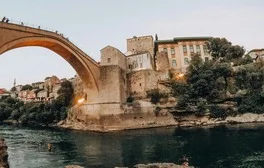
Stari Most - The Iconic Bridge: Stari Most (Old Bridge) defines Mostar's identity. The 16th-century Ottoman arch spanning Neretva River was built by Mimar Hayruddin, a student of the great architect Sinan. For 427 years it stood as engineering marvel and symbol of connection. Then Croat forces shelled it on November 9, 1993, during the Bosnian War, collapsing the stone arch into the turquoise river.
Reconstruction took 11 years using traditional methods - stone from original quarries, Ottoman techniques, and pieces recovered from the riverbed. The bridge reopened in 2004 to international celebration. UNESCO listed it in 2005, recognizing both the structure and what it represents - reconciliation after destruction, rebuilding what war tore apart.
Today the bridge draws crowds who photograph from every angle. Young Mostari (locals) leap 24 meters into the icy Neretva for tips - a tradition dating back centuries, now performed daily in summer. The jump requires courage and proper technique; tourists can watch but shouldn't attempt without training. The bridge remains both monument and living space where locals and visitors mingle.
Old Town and Divided City: The Old Town clusters on both banks beneath the bridge. Cobblestone lanes wind between Ottoman-era houses, now converted to craft shops, cafés, and restaurants. Copperware, carpets, and jewelry fill storefronts targeting tourists. The bazaar atmosphere is authentic in setting but heavily commercialized in function - this is Bosnia's most tourist-saturated spot.
Mostar remains divided ethnically. The west bank is predominantly Croat Catholic, east bank Bosniak Muslim. Boulevard Kralja Tomislava marks the former frontline where neighbors fought neighbors in the 1990s. Bullet-scarred buildings remind visitors that the pictureque bridge conceals recent trauma. Some buildings remain deliberately unrepaired as war memorials.
Koski Mehmed Pasha Mosque (1618) allows minaret climbing for panoramic views over the bridge and red-roofed town. The climb is steep but the photo opportunity unmatched. Karadozbey Mosque and several others dot the old quarter. These mosques were destroyed in war and rebuilt, like the bridge, symbolizing cultural survival.
War Legacy and Museum: The Museum of War and Genocide documents Mostar's 1990s experience. Exhibitions show the siege, shelling, ethnic cleansing, and concentration camps. Photos of destroyed bridge shock visitors who only know the reconstructed version. Personal testimonies from survivors make the recent violence visceral and uncomfortably close.
Walking Mostar reveals war's physical traces everywhere. The Sniper Tower, a destroyed high-rise on the frontline, stands untouched since conflict ended. Its graffiti-covered ruins offer views but climbing is dangerous and technically illegal. Many buildings show bullet holes, shrapnel damage, and hasty repairs. The Spanish Square area demonstrates where fighting was fiercest.
This proximity to violence - both temporal and physical - makes Mostar different from ancient ruins or distant history. The people serving you coffee fought in the war or fled as refugees. The beautiful bridge you photograph was deliberately destroyed within living memory. This context adds weight to what might otherwise be just another scenic town.
Blagaj and Nature Escapes: Blagaj Tekke (12km southeast) is a 16th-century Dervish house built into cliff beside the Buna River source. The setting is spectacular - white stone building against rock face, river gushing from cave mouth below. The tekke (monastery) allows respectful visitors to explore, and the riverside restaurants serve fresh trout.
The Buna source emerges from underground river system, creating turquoise pool before flowing to Neretva. Swimming is possible near the tekke. The site combines natural beauty with Ottoman heritage and active religious function - dervishes still practice here, though tourism now dominates.
Kravice Waterfalls (40km south) offer swimming beneath cascading water. The 25-meter-wide, 25-meter-high falls create natural pools popular with locals and tourists. Summer weekends bring crowds, but the falls provide refreshing escape from Herzegovina's intense heat. The setting is more recreational than pristine wilderness.
Međugorje Pilgrimage: Međugorje (25km southwest) is among the world's most visited Catholic pilgrimage sites. Since 1981, six local youths claimed Virgin Mary apparitions on Apparition Hill. Despite Vatican skepticism, millions of pilgrims visit annually. The village transformed from agricultural to religious tourism center with hotels, shops, and infrastructure supporting mass pilgrimage.
For believers, Međugorje offers profound spiritual experience. For skeptics, it's religious tourism spectacle. The site generates strong reactions either way. Pilgrims climb hills on bare feet, attend outdoor masses, and visit the visionaries. The commercial aspect - hotels, restaurants, souvenir shops - sits uneasily with spiritual claims for some observers.
Visiting Međugorje from Mostar works as half-day trip. The sites - Apparition Hill, Cross Mountain, St. James Church - can be seen in few hours. Whether you believe or not, the phenomenon of millions traveling here for claimed apparitions is sociologically fascinating.
Herzegovina Character: Herzegovina (the region around Mostar) differs from northern Bosnia - hotter, drier, more Mediterranean than Balkan. The landscape resembles Croatia's Dalmatian coast minus the sea. Stone walls, vineyards, and karstic hills replace Bosnia's green forests and rivers. The mentality also differs - Herzegovina people have reputation for directness, pride, and stubbornness.
Mostar's ethnic division reflects Herzegovina's war experience. Unlike Sarajevo's siege or Srebrenica's genocide, Mostar saw two former allies (Bosniaks and Croats) fighting each other after initially cooperating against Serbs. This Bosniak-Croat conflict (1993-94) created bitter memories still affecting city's function.
The 'two schools under one roof' phenomenon persists - children of different ethnicities attend same building but separate classes, learning different curricula. Parallel institutions (hospitals, utilities, municipalities) waste resources and maintain division. This dysfunction makes Mostar symbol of Dayton Agreement's failures alongside its successes.
Practical Mostar: Currency is convertible mark (KM), pegged to euro at 1.95:1. Euros are accepted everywhere tourist-related though change comes in marks. This is Federation entity so markings differ from Republika Srpska - Latin alphabet dominates though Cyrillic appears on Serbian signs.
Languages spoken are Bosnian and Croatian - essentially the same language with political distinctions. English is spoken in tourist areas, German less commonly. The division means Croatian language/culture dominates west, Bosnian language/culture dominates east.
Food is Bosnian/Herzegovinian - ćevapi, burek, dolma, and grilled meats. Trout from Neretva appears on menus. Croatian wines and rakija are available given the proximity. Prices are moderate - meals €8-12, beer €2-3, accommodation €30-60. Mostar is cheaper than Dubrovnik (80km south) which drives some Croatian tourists here.
Public transport is limited - taxis are main option. Central Mostar is entirely walkable - Old Town, frontline, museums all within 2km radius. Mostar-Sarajevo buses run frequently (€10-15, 2.5 hours). Weather: summers are extremely hot (35-40°C), winters mild (5-15°C). Two days covers Mostar, Blagaj, and understanding the divided city; three days allows Kravice, Međugorje, and deeper exploration beyond the famous bridge.
Frequently Asked Questions
Standard, 3 passengers Price is: €129.
Standard, 8 passengers Price is: €265.
Standard, 3 passengers Price is: €151.
Standard, 8 passengers Price is: €277.
Standard, 3 passengers Price is: €151.
Standard, 8 passengers Price is: €277.
· If a transfer is canceled less than 36 hours prior to a transfer time, we will keep the prepaid amount and a refund will not be processed
· The refund process will not be executed for cancellations received less than 36 hours before the scheduled transfer time. In these situations, we will email you a cancellation note that can be used in order to settle the costs from your tour operator, airline, or travel insurance company
· If a flight is delayed for more than an hour, we would need to check our availability first
· Please, keep in mind if we are unable to complete a transfer in which a flight is delayed for more than an hour, Jam Transfer is not responsible if a transfer was not completed and will act in accordance with our Terms and Conditions