Madrid-Barajas Adolfo Suárez Airport Transfer Options: Your Gateway to Spain's Royal Capital
Madrid-Barajas Airport serves Spain's vibrant capital and largest city. This major European hub welcomes visitors to dynamic Madrid with world-class art museums (Prado, Reina Sofía, Thyssen), Royal Palace and grand plazas, Retiro Park, tapas culture and nightlife, flamenco shows, football passion (Real Madrid, Atlético), historic neighborhoods, and gateway to Toledo and Segovia. Located 12 kilometers northeast of Madrid city center, Barajas is Spain's busiest airport and main international gateway.
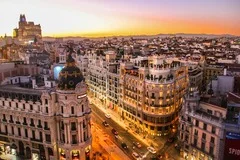
Popular Transfer Routes from Madrid-Barajas Adolfo Suárez Airport
Choose from our most popular transfer destinations:
Private transfers provide the ultimate convenience and comfort for traveling from Madrid-Barajas Adolfo Suárez Airport to your destination. Your professional driver will meet you at arrivals with a personalized sign, assist with your luggage, and transport you directly to your hotel, villa, or resort in a modern, comfortable vehicle.
- Direct door-to-door service to any destination
- No waiting or shared stops
- Professional drivers with local knowledge
- Fixed, transparent pricing with no hidden fees
- Available 24/7 throughout the year
- Air-conditioned comfort
- Child seats and special requirements accommodated
- English-speaking drivers available
- Luxury vehicles available (Premium and First Class)
- Ideal for reaching all destinations
- Perfect for travelers with luggage and families
- Premium service at higher cost than public transport
- Advance booking recommended for peak season
- Night surcharges may apply (22:00-06:00)
JamTransfer specializes in premium Madrid-Barajas Adolfo Suárez airport transfers.
Bus services from Madrid-Barajas Adolfo Suárez Airport provide connections to main destinations.
- Most economical option
- Regular services to city center
- Good for budget travelers
- Multiple stops increase journey time
- Can be crowded in peak season
- Not practical with heavy luggage
Train services availability varies by city.
- Available in some cities
- Fast and efficient when available
- Not available at all airports
- May require connections
Local taxis are available at Madrid-Barajas Adolfo Suárez Airport.
- No advance booking required
- Direct transport to any destination
- Available for immediate departure
- Meter pricing can vary
- Potential language barriers
- Traffic delays affect final price
- Night surcharges apply
For guaranteed service with fixed pricing, book your Madrid-Barajas Adolfo Suárez airport transfer online in advance through JamTransfer.
Car rental is available at Madrid-Barajas Adolfo Suárez Airport.
- Freedom to explore at your own pace
- Cost-effective for groups
- Flexibility with timing
- City traffic can be challenging
- Parking fees and availability
- Not recommended for city-only visits
Hotel shuttles are offered by some hotels.
- Sometimes included at hotels
- Direct service to accommodation
- Must arrange in advance
- Limited departure times
- Often additional cost
Why Choose JamTransfer for Your Madrid-Barajas Adolfo Suárez Airport Transfer?
At JamTransfer.com, we provide excellent service:
- ✓ Personalized meet and greet at arrivals
- ✓ Local drivers with extensive city knowledge
- ✓ English-speaking drivers
- ✓ Fixed transparent pricing
- ✓ 24/7 customer support
- ✓ Free cancellation up to 36 hours before
- ✓ Child seats available
- ✓ Comfortable air-conditioned vehicles
- ✓ Premium and First Class luxury options
- ✓ Local recommendations for attractions and dining
Special Considerations for Madrid-Barajas Adolfo Suárez Airport Transfers
Art Triangle (Golden Triangle): Madrid's three world-class museums form Art Triangle along Paseo del Prado. Museo del Prado is Spain's national art museum - Spanish masters (Velázquez's 'Las Meninas,' Goya's 'The Third of May,' El Greco, Murillo), Flemish/Italian collections (Bosch's 'Garden of Earthly Delights,' Titian, Rubens), 8,000+ paintings, sculpture, decorative arts. Reina Sofía Museum houses modern/contemporary Spanish art - Picasso's 'Guernica' (most famous Spanish painting, anti-war masterpiece), Dalí, Miró, Picasso's studies, 20th-century movements. Thyssen-Bornemisza Museum fills gaps - Old Masters, Impressionists, modern art, private collection made public. Each museum requires 2-3 hours minimum - combined ticket available but exhausting in one day. Prado is unmissable - Velázquez and Goya rooms are highlights. Guernica moving in person. Art Triangle justified Madrid's cultural reputation.
Royal Palace and Habsburg Madrid: Palacio Real (Royal Palace) is Western Europe's largest - 3,418 rooms, official residence of Spanish royals (though current king lives in Zarzuela Palace). State rooms open for tours - Throne Room with Tiepolo ceiling frescoes, Gasparini Room's rococo decoration, Royal Armory, Pharmacy. Plaza de Oriente in front has gardens, Teatro Real (Opera), cafés. Nearby Almudena Cathedral (completed 1993, controversial modern interior). Habsburg Madrid (Madrid de los Austrias) preserves 16th-17th century historic center - Plaza Mayor (grand 1619 square surrounded by arcades, frescoed Casa de la Panadería, cafés under porticos, tourist prices), Mercado de San Miguel (gourmet tapas market in 1916 iron structure), Plaza de la Villa (medieval square). Sol (Puerta del Sol) is Madrid's center - Kilometer Zero (origin of Spain's radial roads), statue of bear and strawberry tree (Madrid symbol), crowds, street performers.
Retiro Park and Gran Vía: Parque del Buen Retiro (350 acres, former royal gardens, now public park since 1868) is Madrid's green lung - boating lake with Alfonso XII Monument, Crystal Palace (iron/glass pavilion hosting exhibitions), rose garden, puppet shows, buskers, Sunday drummers at lake. Retiro is locals' weekend escape - families, couples, joggers, everyone. Gran Vía is Madrid's main thoroughfare - 1.3km boulevard (1910-1929), nicknamed 'Spanish Broadway,' theaters, shopping (Zara, Mango, H&M), cinemas, rooftop bars (Círculo de Bellas Artes rooftop best views), Art Deco architecture, neon signs, traffic. Gran Vía embodies modern Madrid - commerce, entertainment, energy. Cibeles Fountain (Plaza de Cibeles) and Puerta de Alcalá (neoclassical triumphal arch) are Madrid landmarks.
Tapas and Madrid Nightlife: Madrid's food scene is exceptional - tapas bars, traditional taverns, Michelin restaurants, regional Spanish cuisine. Tapas neighborhoods: La Latina (Sunday El Rastro flea market, then tapas - Cava Baja street), Malasaña (hipster, alternative), Chueca (gay-friendly, trendy). Traditional dishes: cocido madrileño (chickpea stew, multi-course meal), callos (tripe), bocadillo de calamares (fried squid sandwich), huevos rotos (broken eggs with potatoes and ham). San Miguel market touristy but convenient. Sobrino de Botín (since 1725, world's oldest restaurant per Guinness, Hemingway favorite) serves roast suckling pig. Madrid dining schedule late - lunch 2-4pm, dinner 9-11pm. Nightlife later - bars 10pm-2am, clubs after 2am, continuing until dawn. Malasaña and Chueca have diverse bars. Madrid parties late - 'Madrid nunca duerme' (Madrid never sleeps).
Football and Flamenco: Madrid is football capital - two major clubs. Real Madrid (Santiago Bernabéu Stadium, capacity 81,000, tours available, trophy room, pitch views) is world's most successful club - 15 European Cups, galácticos policy (signing superstars - Ronaldo, Beckham, Zidane). Atlético Madrid (Metropolitano Stadium, 68,000) is scrappier rival. El Clásico (Real Madrid vs Barcelona) stops Spain. Match tickets expensive, hard to obtain. Stadium tours consolation prize. Flamenco shows at tablaos (flamenco venues) - Corral de la Morería, Cardamomo, Casa Patas. Flamenco originated Andalusia but Madrid has excellent performers. Shows include dinner, drinks, passionate singing (cante), guitar, dancing. Touristy but authentic performers. Flamenco is Spanish soul - duende (heightened emotion), palmas (hand claps), zapateado (footwork).
Day Trips: Madrid's central location enables excellent day trips. Toledo (70km south, 30 minutes train) - UNESCO medieval city, former Spanish capital, El Greco paintings, cathedral, synagogues, Alcázar, maze streets, sword-making tradition. Segovia (90km northwest, 30 minutes AVE train) - Roman aqueduct (1st century, 29m tall, no mortar), Alcázar castle (Disney inspiration), cathedral, roast suckling pig specialty. Ávila (110km northwest) - medieval walls (11th century, best-preserved in Spain), St. Teresa birthplace. Escorial (50km northwest) - monastery-palace, Philip II's austere residence, Bourbon mausoleum. Day trips accessible but consider overnight Toledo/Segovia for evening atmosphere without crowds.
Practical Madrid: Madrid is affordable by Western European standards - cheaper than Barcelona, Paris, London. Euro currency. Spanish/Castilian language (English limited outside tourist areas). Metro excellent (12 lines, extensive, clean, safe, 7am-1:30am, extended weekends). Airport metro Line 8 to city 30 minutes. Walking central Madrid feasible - Prado to Palace 30 minutes. Peak season spring/fall (April-June, September-October, mild 15-25°C). Summer very hot (35-40°C, locals vacation August, some restaurants close). Winter cold (5-10°C, occasional snow). Madrid less touristy than Barcelona - working capital, businesspeople, authentic. Spain's late schedule challenges early risers - adapt to lunch 2pm, dinner 10pm, drinks midnight. Madrid is sophisticated, cultural, energetic, proud - allow 3-4 days minimum, more with day trips.
Frequently Asked Questions
Standard, 3 passengers Price is: €57.
Standard, 3 passengers Adds to the price are: Night from 22:00 to 6:30 / 20.00%
Standard, 4 passengers Price is: €54.
Standard, 7 passengers Price is: €86.
Standard, 7 passengers Adds to the price are: Night from 22:00 to 6:30 / 20.00%
Standard, 8 passengers Price is: €58.
Standard, 3 passengers Price is: €76.
Standard, 3 passengers Adds to the price are: Night from 22:00 to 6:30 / 20.00%
Standard, 7 passengers Price is: €101.
Standard, 7 passengers Adds to the price are: Night from 22:00 to 6:30 / 20.00%
Standard, 4 passengers Price is: €107.
Standard, 6 passengers Price is: €120.
Standard, 8 passengers Price is: €125.
Standard, 3 passengers Price is: €108.
Standard, 3 passengers Adds to the price are: Night from 22:00 to 6:30 / 20.00%
Standard, 7 passengers Price is: €154.
Standard, 7 passengers Adds to the price are: Night from 22:00 to 6:30 / 20.00%
Standard, 3 passengers Price is: €108.
Standard, 3 passengers Adds to the price are: Night from 22:00 to 6:30 / 20.00%
Standard, 7 passengers Price is: €154.
Standard, 7 passengers Adds to the price are: Night from 22:00 to 6:30 / 20.00%
Standard, 3 passengers Price is: €128.
Standard, 3 passengers Adds to the price are: Night from 22:00 to 6:30 / 20.00%
Standard, 4 passengers Price is: €163.
Standard, 6 passengers Price is: €175.
Standard, 7 passengers Price is: €171.
Standard, 7 passengers Adds to the price are: Night from 22:00 to 6:30 / 20.00%
Standard, 8 passengers Price is: €180.
Standard, 3 passengers Price is: €204.
Standard, 3 passengers Adds to the price are: Night from 22:00 to 6:30 / 20.00%
Standard, 4 passengers Price is: €193.
Standard, 6 passengers Price is: €206.
Standard, 7 passengers Price is: €287.
Standard, 7 passengers Adds to the price are: Night from 22:00 to 6:30 / 20.00%
Standard, 8 passengers Price is: €211.
Standard, 3 passengers Price is: €233.
Standard, 3 passengers Adds to the price are: Night from 22:00 to 6:30 / 20.00%
Standard, 4 passengers Price is: €223.
Standard, 6 passengers Price is: €235.
Standard, 7 passengers Price is: €315.
Standard, 7 passengers Adds to the price are: Night from 22:00 to 6:30 / 20.00%
Standard, 8 passengers Price is: €241.
· If a transfer is canceled less than 36 hours prior to a transfer time, we will keep the prepaid amount and a refund will not be processed
· The refund process will not be executed for cancellations received less than 36 hours before the scheduled transfer time. In these situations, we will email you a cancellation note that can be used in order to settle the costs from your tour operator, airline, or travel insurance company
· If a flight is delayed for more than an hour, we would need to check our availability first
· Please, keep in mind if we are unable to complete a transfer in which a flight is delayed for more than an hour, Jam Transfer is not responsible if a transfer was not completed and will act in accordance with our Terms and Conditions