Havana Airport Transfer Options: Your Gateway to Cuba's Historic Capital
José Martí International Airport serves as Cuba's main international gateway, welcoming visitors to Havana - the vibrant heart of Caribbean culture and revolutionary history. This busy airport provides access to one of the world's most fascinating cities frozen in time, where you can explore colorful colonial architecture in Old Havana (a UNESCO World Heritage Site), cruise the iconic Malecón seawall in vintage American cars from the 1950s, discover Ernest Hemingway's favorite haunts from Bodeguita del Medio to La Floridita, dance to authentic son and salsa rhythms in atmospheric casas de la música, admire revolutionary monuments and museums, enjoy world-class cigars and rum at their source, relax on pristine beaches at nearby Playas del Este, and experience the unique blend of Spanish colonial heritage, African rhythms, Soviet-era architecture, and contemporary Cuban resilience. Located approximately 15 kilometers southwest of central Havana, this airport provides excellent access to Vedado, Old Havana (Habana Vieja), Miramar, and the historic neighborhoods that define Cuba's captivating capital with its tropical climate, warm hospitality despite economic challenges, and unforgettable cultural immersion.
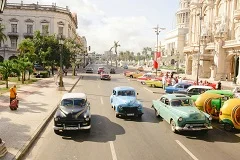
Popular Transfer Routes from Havana Airport
Choose from our most popular transfer destinations:
Private transfers provide the ultimate convenience and comfort for traveling from José Martí Airport to your casa particular, hotel, or any destination across Havana. Your professional driver will meet you at the arrivals hall with a personalized sign, assist with your luggage, and transport you directly to your accommodation in a comfortable vehicle (modern or vintage depending on your preference) navigating Havana's unique street layout. Our Havana airport taxi service drivers are experienced with the capital's winding colonial streets and familiar with all major hotels, casas particulares, and neighborhoods from Old Havana to Vedado and Miramar.
- Direct door-to-door service to any location in Havana
- No waiting in tropical heat or dealing with currency confusion
- Professional multilingual drivers (Spanish, English, Italian, French)
- Fixed, transparent pricing in USD or EUR avoiding dual currency complications
- Available 24/7 throughout the year
- Choice between modern air-conditioned vehicles or classic vintage cars
- Special requests accommodated (child seats, specific route preferences)
- Perfect for reaching Old Havana's narrow streets and hidden casas particulares
- Drivers knowledgeable about Havana's history, restaurants, live music venues, and cigar shops
- Premium service at higher cost than official taxis
- Advance booking highly recommended due to limited tourism infrastructure
- Possible surcharges during major cultural festivals and carnival season
JamTransfer specializes in premium Havana airport to hotel taxi services, featuring both modern comfortable vehicles and authentic vintage American cars for those seeking the classic Havana experience, perfect for tourists, culture enthusiasts, and families exploring Cuba's revolutionary capital.
Official airport taxis are the standard option at José Martí Airport, operated by state companies with fixed zone-based pricing. These yellow or newer taxis wait at the official taxi stand outside arrivals and offer regulated service, though the experience can vary significantly in terms of vehicle condition and driver professionalism.
Service Details: Official taxis use fixed-price zones rather than meters. Expect to pay around 25-30 CUC (Cuban Convertible Peso equivalent to USD) to central Havana areas like Vedado or Old Havana, 20-25 CUC to Miramar. Prices should be agreed before departure. Vehicles range from older Russian Ladas to newer Chinese or Korean cars, with air conditioning quality varying greatly.
- No advance booking required
- Official taxi stands with organized queuing
- Fixed zone pricing (when adhered to)
- Available immediately upon arrival
- Direct transport to any Havana destination
- Currency confusion (CUC vs CUP - tourist vs local pesos)
- Vehicle condition highly variable (from vintage to decrepit)
- Air conditioning often broken or inadequate
- Drivers may try to overcharge uninformed tourists
- Limited English skills with most drivers
- Long queues during peak flight arrival times
- May include unsolicited stops at "uncle's restaurant" or "friend's cigar shop"
- Navigation challenges in Old Havana's maze of one-way streets
- No guaranteed vehicle type or comfort level
For guaranteed fixed pricing, modern vehicle standards, and professional service without currency complications, consider booking your Havana airport transfer online in advance through JamTransfer.
Colectivo taxis are a uniquely Cuban shared transportation option, though they are rarely available directly at the airport for international arrivals. These shared rides in vintage American cars are more common for intercity travel (Havana to Varadero, Trinidad, Viñales) than for airport transfers. When available, they offer an economical and authentic experience but with significant limitations for airport arrivals with luggage.
- Very economical when shared among passengers
- Authentic Cuban experience in classic cars
- Opportunity to meet other travelers
- Drivers often friendly and conversational
- Rarely available at the airport itself
- Must wait until vehicle fills with passengers
- No fixed schedule - unpredictable departure times
- Very limited luggage space shared among 4-5 passengers
- No air conditioning in most classic vehicles
- Indirect routes with multiple drop-off stops
- Uncomfortable for long journeys in tropical heat
- Not practical for families or those with significant luggage
- Communication difficulties without Spanish language skills
Colectivos work well for budget intercity travel but are not recommended for airport arrivals. For comfortable, direct service from the airport, book a private Havana airport transfer that provides dedicated vehicle space for you and your luggage.
Car rental is available at José Martí Airport from state-run companies like Cubacar, Rex, and Havanautos. While driving in Cuba is technically feasible, it comes with significant challenges including limited fuel availability, poor road conditions outside main routes, confusing signage, and the reality that Havana's colonial street layout was never designed for modern vehicle traffic.
- Freedom to explore beyond Havana independently
- Access to Viñales Valley, Varadero, Trinidad, and Bay of Pigs
- Flexibility for multi-day road trips across Cuba
- Convenient for reaching remote tobacco farms and beaches
- Available at the airport from multiple agencies
- RIGHT-HAND driving (cars from Europe and Japan)
- Extremely limited and expensive vehicle availability - book months ahead
- Poor vehicle maintenance standards create breakdown risks
- Fuel shortages common - gas stations may lack petrol for days
- Road conditions deteriorate rapidly outside main highways
- Potholes, wandering animals, and horse-drawn carts create hazards
- Minimal or non-existent road signage in many areas
- Parking extremely difficult in Old Havana's narrow streets
- International driving permit required along with passport
- Insurance mandatory and expensive with high excess fees
- GPS and mobile data unreliable - bring paper maps
- Completely unnecessary for staying within Havana
Hotel and casa particular pickups are commonly offered by many accommodations in Havana, providing either complimentary or paid transfer services from José Martí Airport. This is particularly common at international hotels like Nacional, Parque Central, Iberostar, and upscale casas particulares in Vedado and Miramar that cater to foreign visitors.
- Often included free at luxury hotels and high-end casas
- Direct service to your exact accommodation
- Driver knows the specific location (crucial in Old Havana's maze)
- Coordinated with your flight arrival when arranged in advance
- Welcome service matching accommodation standards
- No advance payment sometimes required
- Common at renovated colonial mansions operating as boutique casas
- Must be arranged well in advance through accommodation
- Email/internet communication with Cuba can be unreliable
- Confirmation may not reach you until arrival
- Limited to guests with confirmed reservations
- Budget casas and cheaper hotels rarely offer this service
- Vehicle type and condition vary dramatically by accommodation tier
- May charge 25-40 USD per transfer for mid-range properties
Check with your hotel or casa particular if they offer airport pickup, especially if staying at National Hotel, Meliá properties, or high-end casas in Vedado. However, communication challenges with Cuba make independent advance booking through JamTransfer a reliable backup or primary option.
Tour packages to Cuba often include airport transfers along with accommodation, meals, and guided excursions. Many specialized Cuba tour operators offer complete vacation packages that include transportation from José Martí Airport plus cultural activities, historical tours, music experiences, and beach extensions to Varadero or cays.
- All-inclusive convenience in a complex destination
- Better value than booking components separately
- Expert guides navigating Cuba's unique challenges
- No need to arrange individual logistics
- Popular packages include Old Havana walking tours with historians
- Classic car tours along the Malecón and through Vedado
- Salsa and son music experiences with live performances
- Ernest Hemingway literary trail visits
- Tobacco farm visits in nearby Pinar del Río
- Revolutionary history tours to museums and monuments
- Combined Havana + Varadero beach packages
- Less flexibility in exploring independently
- Fixed itinerary and group travel dynamics
- May include activities you don't want
- Limited time for spontaneous discoveries
If you prefer flexibility to create your own Havana experience discovering hidden paladares, spontaneous music venues, and off-beaten neighborhoods at your own pace, you can book your Havana airport transfer online separately through JamTransfer and arrange your colonial architecture tours, salsa lessons, cigar factory visits, and beach excursions independently or with local freelance guides.
Why Choose JamTransfer for Your Havana Airport Transfer?
At JamTransfer.com, we understand that navigating Cuba's unique transportation challenges requires reliable partners and clear communication. Our airport transfer services are designed to provide smooth arrival to this fascinating destination:
- ✓ Personalized meet and greet service at arrivals hall
- ✓ Professional multilingual drivers (Spanish, English, Italian, French)
- ✓ Choice of modern air-conditioned vehicles or authentic vintage classic cars
- ✓ Transparent, fixed pricing in USD or EUR avoiding currency confusion
- ✓ 24/7 multilingual customer support
- ✓ Free cancellation up to 36 hours before departure
- ✓ Special requests accommodated (classic car experience, specific neighborhoods)
- ✓ Experienced drivers who navigate Old Havana's complex street layout
- ✓ Knowledge of Havana's history, music venues, authentic paladares, and hidden gems
Special Considerations for Havana Airport Transfers
Neighborhoods and Journey Times: José Martí Airport is located 15 kilometers southwest of central Havana, with journey times generally predictable compared to other major capitals. Central Vedado is typically 20-25 minutes away, Old Havana (Habana Vieja) requires 25-30 minutes navigating through colonial streets, Miramar to the west takes 15-20 minutes, and the upscale neighborhood of Playa requires 20-25 minutes. However, these times assume normal traffic - roadworks are common and can cause significant delays. The Malecón coastal road offers scenic routing but can be slower during busy evening hours when locals gather along the seawall. Journey times can increase during afternoon rush hour (5-7 PM) or when classic American cars from the 1950s break down blocking narrow streets, which happens regularly. Our drivers know alternative routes through residential neighborhoods to bypass congestion while providing local color and historical context during your ride.
Currency System - Critical Information: Cuba operates a confusing dual currency system that significantly impacts travelers. The Cuban Convertible Peso (CUC) is used by tourists and pegged roughly equal to the USD, while the Cuban Peso (CUP or "moneda nacional") is used by locals at a rate of approximately 25:1 to the CUC. Most airport services, hotels, and tourist restaurants price in CUC. Your pre-booked transfer with JamTransfer eliminates currency confusion as you pay fixed prices in USD or EUR online. If using local taxis or services, always clarify whether prices are in CUC or CUP - a 20 CUC taxi ride could be misquoted as "20 pesos" when the driver means CUC, not the much cheaper CUP. The Cuban government has announced plans to unify currencies, but implementation timing remains uncertain. Credit cards from US banks do NOT work in Cuba, and cards from other countries work sporadically. Bring cash (EUR or CAD work better than USD which incurs 10% penalty). ATMs are unreliable, often empty, and charge high fees.
Climate and Best Travel Times: Havana has a tropical climate with two distinct seasons. The dry season (November-April) offers the most pleasant weather with temperatures of 22-28°C, lower humidity, and minimal rainfall - this is peak tourist season when hotels and casas particulares fill quickly. December through March provides ideal conditions for walking Old Havana's cobblestone streets and exploring outdoor attractions. The wet season (May-October) brings higher temperatures (28-33°C), intense humidity (often 80-90%), and frequent afternoon thunderstorms with occasional tropical storms and hurricanes (peak risk August-October). However, summer offers fewer tourists, more availability, and the authentic rhythm of local life. Regardless of season, Havana remains hot and humid, making air conditioning essential for comfort - confirm this with your accommodation and transfer service. Hurricane season requires flexible travel planning as flights can be cancelled with short notice.
Cuban Culture and Revolutionary Etiquette: Cuba is a socialist state with a complex political history that shapes daily life. The Cuban Revolution and figures like Fidel Castro, Che Guevara, and Camilo Cienfuegos are omnipresent in murals, monuments, and conversations. While Cubans are generally warm and welcoming, avoid making political statements or criticizing the government publicly - this can create problems for both you and locals who interact with you. Photography of military installations, airports, police, and government buildings is prohibited. Cubans are passionate, expressive, and often approach tourists to practice English or offer services - distinguish between genuine friendliness and hustlers (jineteros) offering cigars, taxis, or restaurants with commissions. Machismo culture is strong, and solo female travelers may receive persistent attention requiring firm but polite refusal. Despite economic hardships and shortages affecting daily life, Cubans maintain remarkable warmth, humor, and pride. Tipping in CUC is essential as most Cubans earn very low official salaries - tip 10% at restaurants, 1-2 CUC for porters, and drivers appreciate 2-3 CUC extra.
Old Havana Navigation and Colonial Streets: Habana Vieja (Old Havana) is a UNESCO World Heritage Site with over 900 historical buildings dating from the 16th-19th centuries. The neighborhood features a labyrinth of narrow cobblestone streets, many one-way or pedestrian-only, making navigation challenging for drivers unfamiliar with the area. Major plazas include Plaza de Armas, Plaza Vieja, Plaza de la Catedral, and Plaza de San Francisco - these form the core of colonial Havana with restored buildings housing museums, cafes, and galleries. However, many streets remain in severe disrepair with crumbling facades and occasional building collapses. If staying in a casa particular in Old Havana, provide exact addresses to your driver including building number, street name, and nearby landmarks - many buildings lack visible numbers. Streets have both colonial names (used by locals) and revolutionary names (on some maps), creating confusion. Our drivers know the colonial maze intimately and will navigate directly to even the most hidden casas down narrow alleys inaccessible to large vehicles.
Internet and Communication Challenges: Cuba has limited internet connectivity, presenting unique challenges for travelers accustomed to constant connectivity. WiFi is not widely available - access is primarily through ETECSA WiFi hotspots in public parks and plazas where you must purchase cards (1-2 CUC per hour) with scratch-off passwords. Hotels offer WiFi but it's often slow and expensive. Mobile data for foreign SIM cards is virtually non-existent for tourists. This means ride-sharing apps like Uber do not operate in Cuba, and communicating with accommodations requires planning. Pre-booking your airport transfer with JamTransfer ensures you have confirmed transportation regardless of internet availability upon arrival. Download offline maps of Havana (Maps.me works well) before arrival, as GPS works but requires pre-downloaded map data. Many casas particulares can only be contacted by phone (calling from abroad) or in-person. The internet limitation is gradually improving but remains a significant factor in Cuban travel logistics.
Accommodations - Hotels vs Casas Particulares: Havana offers two main accommodation types with very different experiences. State-run hotels range from historic properties like Nacional de Cuba and Parque Central (now managed by international chains) to more dated Soviet-era facilities - these offer reliable standards, 24-hour service, and tourist facilities but can feel impersonal and expensive. Casas particulares (private homes renting rooms) provide authentic Cuban hospitality, home-cooked meals, and personal attention at lower prices - they range from basic rooms in family homes to luxuriously restored colonial mansions. The best casas particulares in Vedado and Old Havana offer colonial architecture, rooftop terraces, and hosts who become local guides and fixers. However, finding casas particulares can be challenging without internet - look for blue anchor symbols indicating government licensing. Standards vary dramatically from basic to boutique. Many travelers find casa particular stays the highlight of their Cuban experience, with hosts providing insider knowledge about Havana's restaurants, music venues, and authentic experiences that guidebooks miss. Book in advance through reputable platforms, as the best casas fill quickly during peak season.
Food Scene - Paladares Revolution: Havana's food scene has transformed dramatically in recent years with the explosion of paladares - privately-owned restaurants that showcase Cuban creativity despite ingredient limitations. Traditional state-run restaurants often serve bland, overpriced food with poor service, but paladares like La Guarida, Doña Eutimia, San Cristobal, and Paladar Los Mercaderes offer innovative Cuban cuisine in atmospheric settings with passionate service. Expect creative twists on classics like ropa vieja, moros y cristianos, lechón, and yuca con mojo. However, ingredient availability fluctuates wildly - shortages of basic items like chicken, eggs, or vegetables are common, and menus often list dishes not actually available. Street food exists but is basic - pizza slices, croquetas, and guarapo (sugarcane juice). International cuisine is limited. Breakfast at casas particulares is usually excellent with fresh tropical fruit, eggs, bread, coffee, and juice. Reservations at popular paladares are essential during peak season. Vegetarians will find limited options outside upscale paladares. Always carry cash as cards work sporadically even at restaurants claiming to accept them.
Frequently Asked Questions
Standard, 3 passengers Price is: €45.
Standard, 4 passengers Price is: €38.
Standard, 7 passengers Price is: €65.
Standard, 8 passengers Price is: €56.
Standard, 10 passengers Price is: €91.
Standard, 15 passengers Price is: €93.
Premium, 3 passengers Price is: €65.
Premium, 8 passengers Price is: €45.
Standard, 3 passengers Price is: €179.
Standard, 4 passengers Price is: €143.
Standard, 7 passengers Price is: €215.
Standard, 8 passengers Price is: €192.
Standard, 10 passengers Price is: €275.
Standard, 15 passengers Price is: €300.
Premium, 3 passengers Price is: €203.
Premium, 8 passengers Price is: €161.
Standard, 4 passengers Price is: €149.
Standard, 7 passengers Price is: €190.
Standard, 8 passengers Price is: €198.
Standard, 10 passengers Price is: €242.
Standard, 15 passengers Price is: €318.
Premium, 3 passengers Price is: €190.
Premium, 8 passengers Price is: €173.
Standard, 3 passengers Price is: €227.
Standard, 4 passengers Price is: €179.
Standard, 7 passengers Price is: €299.
Standard, 8 passengers Price is: €234.
Standard, 10 passengers Price is: €365.
Standard, 15 passengers Price is: €366.
Premium, 3 passengers Price is: €287.
Premium, 8 passengers Price is: €204.
Standard, 3 passengers Price is: €311.
Standard, 4 passengers Price is: €258.
Standard, 7 passengers Price is: €410.
Standard, 8 passengers Price is: €318.
Standard, 10 passengers Price is: €457.
Standard, 15 passengers Price is: €390.
Premium, 3 passengers Price is: €364.
Premium, 8 passengers Price is: €282.
· If a transfer is canceled less than 36 hours prior to a transfer time, we will keep the prepaid amount and a refund will not be processed
· The refund process will not be executed for cancellations received less than 36 hours before the scheduled transfer time. In these situations, we will email you a cancellation note that can be used in order to settle the costs from your tour operator, airline, or travel insurance company
· If a flight is delayed for more than an hour, we would need to check our availability first
· Please, keep in mind if we are unable to complete a transfer in which a flight is delayed for more than an hour, Jam Transfer is not responsible if a transfer was not completed and will act in accordance with our Terms and Conditions