Bucharest Henri Coandă International Airport Airport Transfer Options: Your Gateway to Romania's Capital
Bucharest Henri Coandă Airport (Otopeni) serves Romania's vibrant capital and largest city. This major Balkan hub welcomes visitors to dynamic Bucharest with Palace of Parliament (world's second-largest building), charming Old Town and Lipscani district, grand Belle Époque architecture earning nickname 'Little Paris', Herastrau Park and lakes, vibrant nightlife and affordable dining, Village Museum showcasing Romanian heritage, and gateway to Transylvania and Carpathian Mountains. Located 16 kilometers north of Bucharest city center, Henri Coandă is Romania's busiest airport.
Popular Transfer Routes from Bucharest Henri Coandă International Airport Airport
Choose from our most popular transfer destinations:
Private transfers provide the ultimate convenience and comfort for traveling from Bucharest Henri Coandă International Airport Airport to your destination. Your professional driver will meet you at arrivals with a personalized sign, assist with your luggage, and transport you directly to your hotel in a modern, comfortable vehicle.
- Direct door-to-door service to any Bucharest destination
- No waiting or shared stops
- Professional Romanian/English-speaking drivers
- Fixed, transparent pricing with no hidden fees
- Available 24/7 throughout the year
- Air-conditioned comfort
- Child seats and special requirements accommodated
- Drivers with excellent Bucharest knowledge
- Luxury vehicles available (Premium and First Class)
- Ideal for business travelers and families
- Perfect for travelers with luggage
- Avoid taxi scams and unreliable services
- Premium service at higher cost than public transport
- Advance booking recommended
- Night surcharges may apply (22:00-06:00)
JamTransfer specializes in premium Bucharest Henri Coandă International Airport airport transfers throughout Bucharest.
Express bus 783 connects airport to city center.
- Most economical option (8 lei, ~€1.60)
- Runs 24/7 every 15-40 minutes
- Connects to Piața Unirii (city center)
- Stops at major points including train stations
- Journey time 45-60 minutes depending on traffic
- Can be crowded during peak hours
- Not practical with heavy luggage
- Requires purchasing RATB card first
- Less frequent at night
Train service is very limited from Bucharest Airport.
- Affordable option when available
- Connects to Gara de Nord (main station)
- Very infrequent service (every few hours)
- Not practical for most travelers
- Requires bus connection within airport
- Better alternatives available
- Schedule unreliable
Official taxis are available at airport ranks.
- Direct transport to any destination
- Available for immediate departure
- Relatively affordable (60-80 lei / €12-16 to center)
- SCAM RISK - avoid unlicensed taxis soliciting inside terminal
- Only use official taxi ranks outside arrivals
- Insist on meter or agree price beforehand
- Some drivers overcharge tourists
- Traffic delays can increase costs
- Language barriers possible
- Uber/Bolt generally more reliable
For guaranteed service with fixed pricing and no scam risk, book your Bucharest airport transfer online in advance through JamTransfer.
Car rental is available at Bucharest Henri Coandă International Airport Airport.
- Freedom for day trips to Transylvania
- Cost-effective for groups and regional travel
- Flexibility with timing
- Access to Carpathian Mountains, Brașov, Sinaia
- NOT recommended for Bucharest city only
- Bucharest traffic is chaotic and aggressive
- Parking difficult and expensive downtown
- Road conditions variable outside cities
- Public transport better for city exploration
- Driving culture can be challenging
Hotel shuttles are offered by limited Bucharest hotels.
- Sometimes available at upscale hotels
- Direct service to accommodation
- Drivers familiar with routes
- Must arrange well in advance through hotel
- Limited availability in Bucharest
- Often additional cost
- Limited departure times
- Not common at most properties
Why Choose JamTransfer for Your Bucharest Henri Coandă International Airport Airport Transfer?
At JamTransfer.com, we ensure safe, reliable Bucharest transfers:
- ✓ Personalized meet and greet at arrivals
- ✓ Professional drivers with extensive Bucharest knowledge
- ✓ Romanian and English-speaking drivers
- ✓ Fixed transparent pricing - no scams or surprises
- ✓ 24/7 customer support
- ✓ Free cancellation up to 36 hours before
- ✓ Child seats available
- ✓ Comfortable air-conditioned vehicles
- ✓ Premium and First Class luxury options
- ✓ Avoid taxi scams common at Bucharest airport
- ✓ Local recommendations for Old Town, restaurants, nightlife
Special Considerations for Bucharest Henri Coandă International Airport Airport Transfers
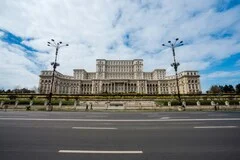
Palace of Parliament: This colossal building (Casa Poporului, House of the People) is Bucharest's most famous sight - world's second-largest administrative building after Pentagon, world's heaviest building (4,098,500,000 kg), Nicolae Ceaușescu's megalomaniacal project. Construction began 1984, required demolishing historic Bucharest neighborhoods (7,000 houses, 30+ churches), forced labor of 20,000 workers, continued after Ceaușescu's execution December 1989 Revolution. Palace has 1,100 rooms (only 400 finished), covers 365,000m², uses 1 million m³ marble, 3,500 tonnes crystal, 700,000 tonnes steel/bronze. Guided tours (advance booking required, ID mandatory) show lavish Ceaușescu-era rooms - marble staircases, crystal chandeliers, handwoven carpets. Palace now houses Parliament, museums, conference center. Viewing is surreal - excess, waste, dictatorship's legacy, unfinished sections, maintenance costs bankrupting. Essential Bucharest experience - both impressive and disturbing.
Old Town (Lipscani) and Historic Center: Lipscani district is Bucharest's atmospheric heart - cobblestone pedestrian streets, 18th-19th century buildings (many beautifully restored, others crumbling), bars, restaurants, clubs, boutiques. Key sites: Stavropoleos Church (1724, tiny Orthodox gem, elaborate carved wood entrance, peaceful courtyard), Hanul lui Manuc (1808, historic inn, still hotel/restaurant), Curtea Veche (Old Princely Court, 15th-century palace ruins, Vlad the Impaler ruled here). Lipscani transforms evening - café terraces, live music, young crowds, affordable nightlife. Revolution Square (Piața Revoluției) nearby commemorates 1989 uprising - former Communist Party headquarters (balcony where Ceaușescu fled by helicopter), memorial to victims. Calea Victoriei (Victory Avenue) is elegant boulevard - Athenaeum concert hall (neoclassical dome, George Enescu Philharmonic), National Museum of Art (Royal Palace), Revolution Square. Old Town blends Belle Époque elegance with communist neglect with modern restoration - layers of history visible.
Belle Époque Architecture and 'Little Paris': Pre-WWI Bucharest was nicknamed 'Little Paris' (Micul Paris) - French-style boulevards, Arc de Triomphe (Arcul de Triumf, smaller than Paris original but similar), Belle Époque mansions, tree-lined streets. Best examples along Calea Victoriei, around Cișmigiu Gardens, in residential neighborhoods (Primăverii, Dorobanți). Buildings often decaying - elegant facades with peeling paint, missing details, awaiting restoration. Communist era saw demolition (Ceaușescu razed 20% of historic center for systematization), neglect, ideological rejection of bourgeois past. Post-communist period brought restoration efforts but underfunded. The contrast - restored gems next to crumbling palaces - epitomizes Bucharest's contradictions. Romanian Athenaeum (concert hall) is finest Belle Époque building - 1888, recently restored, frescoed interior, George Enescu Festival venue.
Parks and Lakes: Bucharest has excellent green spaces. Herăstrău Park (northern Bucharest, largest, 187 hectares) surrounds lake - rowing, cycling, walking paths, restaurants, Village Museum. Cișmigiu Gardens (central, 1847, romantic English-style park) has lake, island, rowboats, cafés. Carol Park (southern, monumental architecture, mausoleum). Bucharest built around lakes and Dâmbovița River - water features throughout. Summer Bucharest transforms - terraces packed, park concerts, outdoor dining. Parks are locals' weekend retreat - families, couples, elderly playing chess. Romanian outdoor culture strong when weather permits.
Village Museum (Muzeul Satului): This open-air museum (Herăstrău Park) showcases traditional Romanian village life - 300+ authentic buildings (houses, churches, windmills, watermills) relocated from across Romania, arranged representing different regions. Visitors walk through recreated village - interiors furnished period-appropriate, craftspeople demonstrate traditional techniques (weaving, pottery). Museum preserves rural heritage threatened by communist collectivization and modernization. Different architectural styles: Maramureș wooden churches (UNESCO-style), Transylvanian Saxon houses, Moldavian homesteads. Essential for understanding Romanian rural traditions - 90% of Romania was rural pre-WWII. Allow 2-3 hours. Entrance modest (20 lei, ~€4).
Nightlife and Food: Bucharest nightlife is legendary - affordable, vibrant, diverse. Old Town packed with bars (Corso, The Trafalgar, Shift, Fire), clubs (Control, Guesthouse, Expirat). Students, expats, tourists mix. Drinks cheap by Western standards (beer €2-3, cocktails €5-7). Romanian food hearty: sarmale (cabbage rolls with pork and rice), mici/mititei (grilled skinless sausages), ciorbă (sour soup - tripe, meatballs, vegetables), mămăligă (polenta), papanași (fried doughnut dessert with jam and sour cream). Caru' cu Bere (1879, ornate restaurant, traditional food, folk shows - touristy but spectacular interior). Hanul lui Manuc (historic atmosphere). Modern Bucharest also has international cuisine, hipster cafés, craft beer bars. Romanian wine improving - Dealu Mare, Murfatlar regions produce quality reds/whites. Țuică (plum brandy, 40%+ alcohol) is national spirit - offered as welcome, digestif.
Communist Heritage and 1989 Revolution: Bucharest bears heavy communist legacy - systematization (Ceaușescu's planned demolition/reconstruction), Palace of Parliament, concrete apartment blocks (blocuri), wide boulevards. Communist Bucharest aimed to erase 'bourgeois' past, create socialist utopia. Result: destroyed historic neighborhoods, grandiose projects, housing blocks, suffering. December 1989 Revolution started Timișoara, spread to Bucharest - protests, Ceaușescu fled (captured, executed December 25), regime fell. Revolution Square, Memorial of Rebirth (controversial modern monument), cemeteries with victims' graves commemorate events. Visiting Bucharest requires understanding this history - Palace explains dictatorship's megalomania, Old Town's gaps show demolition, apartment blocks house millions. Romania transitioned from communism to EU membership (2007) - Bucharest reflects transformation, contradictions, ongoing change.
Practical Bucharest: Bucharest is affordable by Western European standards - dining, accommodation, nightlife cheaper than Prague/Budapest. Romanian leu (RON) currency (1€ = 5 RON approximately). Romanian language (Romance language - closest to Latin, some Italian/French similarities). English increasingly common especially among young. Metro system efficient (4 lines, M2 connects airport express bus to city), buses/trams supplement. Taxis cheap but use official companies/apps (Uber, Bolt available) avoiding unlicensed drivers. Bucharest is safe generally but petty crime exists - watch belongings, avoid unlit areas at night. Stray dogs were issue (addressed but some remain). Peak season: spring/fall (April-June, September-October, 15-25°C). Summer hot (30-35°C, occasional 40°C). Winter cold (-5 to 5°C, snow, gray). Bucharest often underestimated - visitors expect drab communist city, discover vibrant nightlife, Belle Époque charm, affordability, friendly locals. City deserves 2-3 days - Palace, Old Town, museums, parks, nightlife. Day trips: Brașov/Transylvania (2.5 hours, medieval Brașov, Bran Castle 'Dracula's Castle'), Sinaia (mountain resort, Peleș Castle), Danube Delta. Bucharest is rough around edges - crumbling facades, communist blocks, stray dogs, bureaucracy - but offers authenticity, culture, value, surprise.
Frequently Asked Questions
· If a transfer is canceled less than 36 hours prior to a transfer time, we will keep the prepaid amount and a refund will not be processed
· The refund process will not be executed for cancellations received less than 36 hours before the scheduled transfer time. In these situations, we will email you a cancellation note that can be used in order to settle the costs from your tour operator, airline, or travel insurance company
· If a flight is delayed for more than an hour, we would need to check our availability first
· Please, keep in mind if we are unable to complete a transfer in which a flight is delayed for more than an hour, Jam Transfer is not responsible if a transfer was not completed and will act in accordance with our Terms and Conditions