Banja Luka Airport Airport Transfer Options: Your Gateway to Republika Srpska's Capital and Vrbas Valley
Banja Luka Airport serves Republika Srpska's administrative center and Bosnia's second-largest city. This gateway welcomes visitors to charming Banja Luka with tree-lined boulevards and relaxed atmosphere, Kastel Fortress on Vrbas River, Orthodox cathedrals and Habsburg architecture, Ferhadija Mosque reconstruction story, proximity to Kozara National Park memorial, Una River rafting and waterfalls, and gateway to northwest Bosnia's green landscapes. Located 23 kilometers north of Banja Luka city center at Mahovljani, the airport provides access to Republika Srpska's heartland.
Popular Transfer Routes from Banja Luka Airport Airport
Choose from our most popular transfer destinations:
Private transfers provide the ultimate convenience and comfort for traveling from Banja Luka Airport Airport to your destination. Your professional driver will meet you at arrivals with a personalized sign, assist with your luggage, and transport you directly to your hotel in a modern, comfortable vehicle.
- Direct door-to-door service to any Banja Luka destination
- No waiting or shared stops
- Professional Serbian/English-speaking drivers
- Fixed, transparent pricing with no hidden fees
- Available 24/7 throughout the year
- Air-conditioned comfort
- Child seats and special requirements accommodated
- Drivers with excellent local knowledge
- Luxury vehicles available (Premium and First Class)
- Ideal for families and business travelers
- Perfect for travelers with luggage
- Navigate to city center efficiently
- Premium service at higher cost than taxi
- Advance booking recommended
- Night surcharges may apply (22:00-06:00)
JamTransfer specializes in premium Banja Luka Airport airport transfers throughout Banja Luka and Republika Srpska.
Public buses connect airport to Banja Luka center.
- Very affordable (2-3 KM / approximately €1.50)
- Operates during daytime
- Local experience
- Limited frequency
- Journey time 40-50 minutes
- Challenging with luggage
- Schedule may not align with all flights
- Limited late night service
Train service is not available from Banja Luka Airport.
- Banja Luka has railway station with connections
- NO direct train from airport
- Must take taxi to station first
- Not practical for airport arrivals
Official taxis are available at designated airport ranks.
- No advance booking required
- Direct transport to any destination
- Available for immediate departure
- Affordable prices
- Approximately 30-40 KM (€15-20) to city center
- NEGOTIATE price before departure
- Some drivers may try to overcharge tourists
- Variable English proficiency
- 23km distance can vary with traffic
For guaranteed service with fixed pricing, book your Banja Luka airport transfer online in advance through JamTransfer.
Car rental is available at Banja Luka Airport Airport with local companies.
- Perfect for exploring northwest Bosnia
- Visit Una River, Kozara, Vrbas Canyon
- Freedom for countryside exploration
- Drive to Croatia border (close proximity)
- Cost-effective for groups
- Not needed for Banja Luka city only
- City is compact and walkable
- Parking available but not always convenient
- Road quality varies in rural areas
- Entity border crossings within Bosnia
Hotel shuttles are offered by some Banja Luka hotels.
- Available at some hotels
- Sometimes included in room rate
- Direct service to accommodation
- Must arrange in advance through hotel
- Limited to hotels offering service
- Limited departure times
- Often additional cost
- Not widely available
Why Choose JamTransfer for Your Banja Luka Airport Airport Transfer?
At JamTransfer.com, we understand Balkan hospitality:
- ✓ Personalized meet and greet at arrivals
- ✓ Professional drivers with local knowledge
- ✓ Serbian and English-speaking drivers
- ✓ Fixed transparent pricing in euros
- ✓ 24/7 customer support
- ✓ Free cancellation up to 36 hours before
- ✓ Child seats available
- ✓ Comfortable air-conditioned vehicles
- ✓ Premium and First Class luxury options
- ✓ Service to all Banja Luka areas and region
- ✓ Local recommendations for Vrbas River, Kozara, Una
Special Considerations for Banja Luka Airport Airport Transfers
Banja Luka's Relaxed Character: Banja Luka surprises visitors with its calm, orderly atmosphere - tree-lined streets, outdoor cafés, and pedestrian zones create Central European rather than typical Balkan feel. The city avoided direct combat during the 1990s war, leaving Habsburg-era buildings intact. This preserved architecture gives Banja Luka sophistication missing from war-damaged Balkan cities.
The Vrbas River flows through the center, with parks and walking paths along its banks. Locals gather at riverside cafés, students fill the university quarter, and evening strolls along the promenade are daily ritual. The pace is unhurried - Banja Luka lacks Sarajevo's intensity or Pristina's youth energy, offering instead provincial capital tranquility.
As Republika Srpska's administrative seat, Banja Luka serves as the entity's political center (the country's capital remains Sarajevo). This dual-capital reality reflects Bosnia's complex post-war structure - one country, two entities, three constituent peoples, all trying to function together under Dayton Agreement framework.
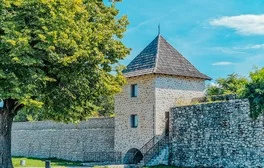
Kastel Fortress and Vrbas River: Kastel Fortress sits on elevated ground overlooking Vrbas River. Roman origins gave way to medieval fortifications, Ottoman modifications, and Austrian additions. What remains today are mainly walls and ramparts surrounding grassy grounds used for concerts and festivals. The fortress is more pleasant park than imposing stronghold.
Walking the walls offers views over red-roofed city and the green Vrbas winding through. Summer brings open-air events, theater performances, and music festivals utilizing the atmospheric setting. The fortress grounds connect to riverside paths ideal for cycling or jogging along the water.
Vrbas River defines Banja Luka geographically and culturally. Cleaner than most Balkan urban rivers, it allows swimming in designated areas upstream. Kayaking and rafting are popular, with several operators offering trips. The river's emerald-green color comes from karst geology upstream in Vrbas Canyon.
Religious Sites and Reconstruction: Christ the Saviour Cathedral (2004) dominates the skyline with golden domes visible citywide. This massive Orthodox church, built post-war, symbolizes Republika Srpska's Serbian Orthodox identity. The interior features Byzantine-style frescoes, marble, and elaborate iconostasis. While architecturally impressive, its size relative to the city raises questions about priorities.
Ferhadija Mosque tells a different story. The 16th-century Ottoman mosque was destroyed in 1993 during ethnic cleansing of Banja Luka's Muslim population. Reconstruction began in 2001 and completed in 2016, funded internationally. The rebuilding process was contentious - locals protested, and the 2001 foundation stone laying ceremony ended in riots where Serb nationalists attacked returnees.
Today the reconstructed mosque stands as testament to both destruction and reconciliation efforts. The controversy highlights ongoing tensions beneath Banja Luka's calm surface. Catholic Cathedral of Christ the King (1939) and several Serbian Orthodox churches complete the religious landscape showing the city's multi-faith history.
Habsburg Architecture and Green Spaces: Banja Luka's center retains Austro-Hungarian character from 1878-1918 rule. Yellow-painted administrative buildings, wide boulevards, and formal squares reflect this heritage. The City Hall and Ban's Palace exemplify Habsburg architectural style - ordered, symmetrical, and elegant in understated way.
Green spaces are abundant - locals claim Banja Luka is Bosnia's greenest city. Mladen Stojanović Park along Vrbas, City Park with its fountains and monuments, and tree-lined streets create garden-city atmosphere. This greenery makes Banja Luka pleasant for walking and outdoor dining beyond what you'd expect from industrial regional center.
The pedestrian street (Gospodska) hosts cafés where locals spend hours over coffee and conversation. Evening korzo (promenade) brings families, couples, and friend groups strolling between Kralja Petra I Karađorđevića and Krajina Square. This café culture defines daily life more than monuments or museums.
Day Trips - Kozara and Nature: Kozara National Park (30km south) centers on Mount Kozara where WWII battle and Partisan memorial complex commemorate 1942 fighting. The massive concrete monument (1972) by sculptor Dušan Džamonja dominates the mountain. The surrounding beech forests offer hiking trails and fresh air escape from the city.
Una River (70km west toward Croatian border) is Bosnia's most beautiful waterway. Martin Brod waterfalls and Štrbački Buk cascade through emerald pools. Rafting and kayaking on Una rank among Europe's best whitewater experiences, with pristine nature and reasonable prices. The river marks the entity boundary between Republika Srpska and Federation.
Krupa na Vrbasu Monastery (50km south) offers riverside medieval monastery in dramatic canyon setting. Vrbas Canyon itself provides hiking, climbing, and scenic drives through gorges and forests. Jajce (90km southeast) has spectacular waterfall in town center and medieval fortress, though it's in Federation entity requiring border awareness.
Republika Srpska Context: Understanding Banja Luka requires understanding Republika Srpska's position within Bosnia and Herzegovina. The entity was created through Dayton Agreement (1995) ending the war, controlling 49% of Bosnia's territory. It has significant autonomy - its own government, police, and symbols, though defense and foreign policy remain state-level.
The entity's legitimacy is debated. It resulted from ethnic cleansing that expelled Bosniaks and Croats, creating Serb-majority area. Some view it as legitimate self-determination, others as reward for war crimes. This political complexity affects even tourism - Republika Srpska promotes itself separately, uses Serbian dinar alongside convertible mark in practice, and maintains distinct identity.
Visitors notice this in subtle ways - Serbian flags alongside Bosnia's, Cyrillic alphabet dominance, references to Serbia as 'motherland,' and political rhetoric emphasizing Serb identity over Bosnian citizenship. The International High Representative still oversees Dayton implementation, and debate continues over whether Republika Srpska will remain integrated or seek further autonomy.
Practical Banja Luka: The official currency is convertible mark (KM) pegged to euro at 1.95:1, though Serbian dinar is also accepted and used informally. This dual-currency reality reflects entity's orientation toward Serbia economically and culturally.
Language is Serbian, written primarily in Cyrillic alphabet though Latin appears on signage. English is spoken by younger generation and tourism workers. German has historical presence from Austrian times. The language is mutually intelligible with Bosnian and Croatian but locals strongly identify it as Serbian.
Cuisine is Balkan - ćevapi, pljeskavica, sarma (cabbage rolls), and grilled meats dominate. Kajmak (clotted cream), ajvar (pepper spread), and fresh bread accompany most meals. Prices are very affordable - meals €6-10, beer €1.50-2, hotels €30-60. Banja Luka is cheaper than Sarajevo, attracting regional tourists seeking value.
Public transport is limited - taxis are main option and inexpensive. Central Banja Luka is compact and walkable. Banja Luka-Sarajevo buses run regularly (€10-15, 3-4 hours) crossing entity boundary - usually uneventful though police checks occur. Weather: summers are hot (28-35°C), winters cold with occasional snow (0 to -5°C). Two days covers Banja Luka's sights; longer stays allow Kozara, Una River, and exploring northwest Bosnia's quieter landscapes away from tourist-packed Sarajevo and Mostar.
Frequently Asked Questions
Standard, 3 passengers Price is: €32.
Standard, 8 passengers Price is: €90.
Standard, 3 passengers Price is: €84.
Standard, 8 passengers Price is: €110.
Standard, 3 passengers Price is: €116.
Standard, 8 passengers Price is: €139.
Standard, 3 passengers Price is: €123.
Standard, 8 passengers Price is: €170.
Standard, 3 passengers Price is: €151.
Standard, 8 passengers Price is: €183.
Standard, 3 passengers Price is: €271.
Standard, 8 passengers Price is: €321.
· If a transfer is canceled less than 36 hours prior to a transfer time, we will keep the prepaid amount and a refund will not be processed
· The refund process will not be executed for cancellations received less than 36 hours before the scheduled transfer time. In these situations, we will email you a cancellation note that can be used in order to settle the costs from your tour operator, airline, or travel insurance company
· If a flight is delayed for more than an hour, we would need to check our availability first
· Please, keep in mind if we are unable to complete a transfer in which a flight is delayed for more than an hour, Jam Transfer is not responsible if a transfer was not completed and will act in accordance with our Terms and Conditions