Amsterdam Airport Schiphol Airport Transfer Options: Your Gateway to the Netherlands' Canal Capital
Amsterdam Airport Schiphol serves the Netherlands' vibrant capital and one of Europe's most unique cities. This major European hub welcomes visitors to picturesque Amsterdam with historic canal belt (UNESCO World Heritage), world-class museums (Rijksmuseum, Van Gogh Museum, Anne Frank House), bicycle culture and brown cafés, Red Light District and liberal attitudes, tulips and flower markets, Dutch Golden Age heritage, and charming neighborhoods. Located 9 kilometers southwest of Amsterdam city center, Schiphol is one of Europe's busiest and best-connected airports.
Popular Transfer Routes from Amsterdam Airport Schiphol Airport
Choose from our most popular transfer destinations:
Private transfers provide the ultimate convenience and comfort for traveling from Amsterdam Airport Schiphol Airport to your destination. Your professional driver will meet you at arrivals with a personalized sign, assist with your luggage, and transport you directly to your hotel, villa, or resort in a modern, comfortable vehicle.
- Direct door-to-door service to any destination
- No waiting or shared stops
- Professional drivers with local knowledge
- Fixed, transparent pricing with no hidden fees
- Available 24/7 throughout the year
- Air-conditioned comfort
- Child seats and special requirements accommodated
- English-speaking drivers available
- Luxury vehicles available (Premium and First Class)
- Ideal for reaching all destinations
- Perfect for travelers with luggage and families
- Premium service at higher cost than public transport
- Advance booking recommended for peak season
- Night surcharges may apply (22:00-06:00)
JamTransfer specializes in premium Amsterdam Airport Schiphol airport transfers.
Bus services from Amsterdam Airport Schiphol Airport provide connections to main destinations.
- Most economical option
- Regular services to city center
- Good for budget travelers
- Multiple stops increase journey time
- Can be crowded in peak season
- Not practical with heavy luggage
Train services availability varies by city.
- Available in some cities
- Fast and efficient when available
- Not available at all airports
- May require connections
Local taxis are available at Amsterdam Airport Schiphol Airport.
- No advance booking required
- Direct transport to any destination
- Available for immediate departure
- Meter pricing can vary
- Potential language barriers
- Traffic delays affect final price
- Night surcharges apply
For guaranteed service with fixed pricing, book your Amsterdam Airport Schiphol airport transfer online in advance through JamTransfer.
Car rental is available at Amsterdam Airport Schiphol Airport.
- Freedom to explore at your own pace
- Cost-effective for groups
- Flexibility with timing
- City traffic can be challenging
- Parking fees and availability
- Not recommended for city-only visits
Hotel shuttles are offered by some hotels.
- Sometimes included at hotels
- Direct service to accommodation
- Must arrange in advance
- Limited departure times
- Often additional cost
Why Choose JamTransfer for Your Amsterdam Airport Schiphol Airport Transfer?
At JamTransfer.com, we provide excellent service:
- ✓ Personalized meet and greet at arrivals
- ✓ Local drivers with extensive city knowledge
- ✓ English-speaking drivers
- ✓ Fixed transparent pricing
- ✓ 24/7 customer support
- ✓ Free cancellation up to 36 hours before
- ✓ Child seats available
- ✓ Comfortable air-conditioned vehicles
- ✓ Premium and First Class luxury options
- ✓ Local recommendations for attractions and dining
Special Considerations for Amsterdam Airport Schiphol Airport Transfers
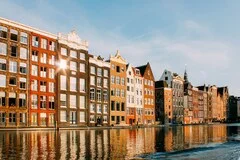
Canal Belt and Historic Center: Amsterdam's 17th-century Canal Ring (Grachtengordel - UNESCO World Heritage) features four main canals (Singel, Herengracht, Keizersgracht, Prinsengracht) with 1,500+ bridges, gabled houses, houseboats, tree-lined banks. Canal houses have distinctive narrow facades (taxed by width), steep stairs (furniture hoisted through windows), gables (neck, bell, step styles). Dam Square is city center - Royal Palace (Koninklijk Paleis, still used for state functions), Nieuwe Kerk (New Church, 15th century, royal weddings, exhibitions), National Monument (WWII memorial). Jordaan neighborhood (west of canal belt) is most charming - working-class area gentrified, art galleries, boutiques, brown cafés, Noordermarkt (Saturday market), Anne Frank House. Canal cruises offer perspective - day or evening with illuminated bridges (100,000 lights). Walk canals at leisure - Brouwersgracht, Leidsegracht, Reguliersgracht (Seven Bridges view). Amsterdam's canals define the city - UNESCO recognized as 'greatest example of Renaissance town planning.'
Museum Quarter: Museumplein hosts three major museums. Rijksmuseum (national museum) is Netherlands' finest - Dutch Golden Age masters including Rembrandt's 'Night Watch,' Vermeer's 'Milkmaid,' Frans Hals, works spanning 800 years, stunning neo-Gothic building, library, gardens. Van Gogh Museum houses world's largest Van Gogh collection - 200+ paintings including 'Sunflowers,' 'Bedroom,' 'Potato Eaters,' sketches, letters, chronological journey through his life. Stedelijk Museum focuses on modern/contemporary art - Mondrian, Chagall, Warhol, design collection. All three museums require advance booking (especially Van Gogh - sells out days ahead). I Amsterdam letters at Museumplein popular photo spot. Vondelpark nearby is Amsterdam's central park - cycling, jogging, open-air theater summer, cafés. Museum Quarter requires full day - Rijksmuseum alone needs 3-4 hours.
Anne Frank House: This museum (Prinsengracht 263) preserves hiding place where Anne Frank and family concealed from Nazis 1942-44 before betrayal and deportation. Original diary displayed, secret annex behind bookcase accessible, moving exhibition about Holocaust, Anne's life, wartime Amsterdam. Advance online booking essential (months ahead for peak season, €14-16.50) - no tickets sold at door. Visit is powerful, emotional - cramped rooms, historical context, universal message. Allow 1-1.5 hours. Anne Frank House is Amsterdam's most-visited attraction - testament to Holocaust, human resilience, one girl's diary giving voice to millions murdered. Visitors often tearful. Book early or likely disappointed.
Bicycle Culture: Amsterdam is world's cycling capital - 880,000 bikes (more than residents), 500km cycle paths, bike parking everywhere (including multi-story bike garages), flat terrain. Bike rentals ubiquitous - MacBike, Bike City, Black Bikes, hotels often provide. Cycling rules: Stay in bike lanes (red paths), signal turns, watch for trams (tracks slippery, wheel-catching hazard), ring bell to warn pedestrians, lock securely (bike theft common). Cycling quintessentially Dutch - businesspeople in suits, mothers with multiple children, elderly - everyone cycles. Bike tours available. Alternative: walk (Amsterdam compact, walkable) or tram system (excellent, complex for tourists). Driving downtown not recommended - one-way streets, canals, bikes, parking expensive/limited. Amsterdam designed for bikes - experience like locals.
Brown Cafés and Dutch Food: Brown cafés (bruine kroeg) are traditional Dutch pubs - dark wood paneling, low ceilings, tobacco-stained walls (now smoke-free), cozy atmosphere, beer, jenever (Dutch gin). Historic cafés: Café Hoppe (since 1670), In 't Aepjen (1519, oldest, former sailors' hostel), Café de Dokter (smallest), 't Smalle (canal-side, jenever distillery). Modern grand cafés offer larger spaces, food. Dutch cuisine: stroopwafel (syrup waffle), bitterballen (beef croquettes - bar snack), herring (raw with onions - from stalls), poffertjes (mini pancakes), stamppot (mashed potato with vegetables and sausage), Dutch pancakes (between crêpe and American pancake), cheese (Gouda, Edam). Indonesian food (colonial legacy) - rijsttafel (rice table with many dishes). Beer: Heineken (brewery museum tour), craft breweries (Brouwerij 't IJ in windmill), Belgian beers widely available.
Red Light District and Liberal Culture: De Wallen (Red Light District) around Oudezijds Voorburgel canal is legal prostitution area - women in window displays (red lights), sex shops, peep shows. Prostitution legal and regulated in Netherlands since 2000 (though controversial, debates about exploitation continue). District also has historic buildings (Oude Kerk church, 14th century), bars, restaurants. Tourists flock here - respectful viewing acceptable, photography of workers prohibited (violators' cameras smashed). Netherlands' liberal policies extend to soft drugs - coffeeshops (not coffee shops) legally sell cannabis, magic truffles available in smart shops. Coffeeshops have menus, Amsterdam has 250+, locals and tourists mix. Liberal doesn't mean lawless - hard drugs illegal, public intoxication frowned upon. Amsterdam's tolerance attracts tourists but also stag parties, backpackers - city attempting balance between liberalism and liveability.
Practical Amsterdam: Amsterdam is expensive - hotels, dining, attractions costly. Euro currency. English universally spoken. Public transport: trams (extensive network, OV-chipkaart needed), metro (limited downtown), buses, ferries (free across IJ river to Noord). Amsterdam Card offers museum/transport access. Peak season April-September (tulips peak April-May), Christmas. Summer crowded (20-25°C). Spring/fall pleasant. Winter cold/wet (5°C, rain common). Book Anne Frank House months ahead, Van Gogh Museum weeks ahead. Tourist crowds overwhelming - consider visiting off-season or staying in quieter neighborhoods (Jordaan, De Pijp, Oud-West). Amsterdam changed - gentrification, mass tourism, rising costs displacing locals. Still magical - canals, cycling, museums, tolerance, cosmopolitan atmosphere. Allow 3-4 days minimum.
Frequently Asked Questions
Standard, 3 passengers Price is: €52.
Standard, 3 passengers Adds to the price are: Season 1 from 12-31 to 12-31 / 40.00%, Season 2 from 01-01 to 01-01 / 40.00%
Standard, 4 passengers Price is: €52.
Standard, 4 passengers Adds to the price are: Season 1 from 12-31 to 12-31 / 40.00%, Season 2 from 01-01 to 01-01 / 40.00%
Standard, 8 passengers Price is: €65.
Standard, 8 passengers Adds to the price are: Season 1 from 12-31 to 12-31 / 40.00%, Season 2 from 01-01 to 01-01 / 40.00%
Standard, 19 passengers Price is: €252.
Standard, 19 passengers Adds to the price are: Season 1 from 12-31 to 12-31 / 40.00%, Season 2 from 01-01 to 01-01 / 40.00%
Premium, 3 passengers Price is: €58.
Premium, 3 passengers Adds to the price are: Season 1 from 12-31 to 12-31 / 40.00%, Season 2 from 01-01 to 01-01 / 40.00%
Premium, 7 passengers Price is: €71.
Premium, 7 passengers Adds to the price are: Season 1 from 12-31 to 12-31 / 40.00%, Season 2 from 01-01 to 01-01 / 40.00%
First Class, 3 passengers Price is: €97.
First Class, 3 passengers Adds to the price are: Season 1 from 12-31 to 12-31 / 40.00%, Season 2 from 01-01 to 01-01 / 40.00%
Standard, 4 passengers Price is: €58.
Standard, 4 passengers Adds to the price are: Season 1 from 12-31 to 12-31 / 40.00%, Season 2 from 01-01 to 01-01 / 40.00%
Standard, 8 passengers Price is: €71.
Standard, 8 passengers Adds to the price are: Season 1 from 12-31 to 12-31 / 40.00%, Season 2 from 01-01 to 01-01 / 40.00%
Standard, 3 passengers Price is: €97.
Standard, 3 passengers Adds to the price are: Season 1 from 12-31 to 12-31 / 40.00%, Season 2 from 01-01 to 01-01 / 40.00%
Standard, 4 passengers Price is: €126.
Standard, 4 passengers Adds to the price are: Season 1 from 12-31 to 12-31 / 40.00%, Season 2 from 01-01 to 01-01 / 40.00%
Standard, 8 passengers Price is: €158.
Standard, 8 passengers Adds to the price are: Season 1 from 12-31 to 12-31 / 40.00%, Season 2 from 01-01 to 01-01 / 40.00%
Standard, 19 passengers Price is: €315.
Standard, 19 passengers Adds to the price are: Season 1 from 12-31 to 12-31 / 40.00%, Season 2 from 01-01 to 01-01 / 40.00%
Premium, 3 passengers Price is: €116.
Premium, 3 passengers Adds to the price are: Season 1 from 12-31 to 12-31 / 40.00%, Season 2 from 01-01 to 01-01 / 40.00%
Premium, 7 passengers Price is: €189.
Premium, 7 passengers Adds to the price are: Season 1 from 12-31 to 12-31 / 40.00%, Season 2 from 01-01 to 01-01 / 40.00%
First Class, 3 passengers Price is: €189.
First Class, 3 passengers Adds to the price are: Season 1 from 12-31 to 12-31 / 40.00%, Season 2 from 01-01 to 01-01 / 40.00%
Standard, 3 passengers Price is: €97.
Standard, 3 passengers Adds to the price are: Season 1 from 12-31 to 12-31 / 40.00%, Season 2 from 01-01 to 01-01 / 40.00%
Standard, 4 passengers Price is: €126.
Standard, 4 passengers Adds to the price are: Season 1 from 12-31 to 12-31 / 40.00%, Season 2 from 01-01 to 01-01 / 40.00%
Standard, 8 passengers Price is: €176.
Standard, 8 passengers Adds to the price are: Season 1 from 12-31 to 12-31 / 40.00%, Season 2 from 01-01 to 01-01 / 40.00%
Standard, 19 passengers Price is: €315.
Standard, 19 passengers Adds to the price are: Season 1 from 12-31 to 12-31 / 40.00%, Season 2 from 01-01 to 01-01 / 40.00%
Premium, 3 passengers Price is: €116.
Premium, 3 passengers Adds to the price are: Season 1 from 12-31 to 12-31 / 40.00%, Season 2 from 01-01 to 01-01 / 40.00%
Premium, 7 passengers Price is: €189.
Premium, 7 passengers Adds to the price are: Season 1 from 12-31 to 12-31 / 40.00%, Season 2 from 01-01 to 01-01 / 40.00%
First Class, 3 passengers Price is: €189.
First Class, 3 passengers Adds to the price are: Season 1 from 12-31 to 12-31 / 40.00%, Season 2 from 01-01 to 01-01 / 40.00%
Standard, 3 passengers Price is: €158.
Standard, 3 passengers Adds to the price are: Season 1 from 12-31 to 12-31 / 40.00%, Season 2 from 01-01 to 01-01 / 40.00%
Standard, 4 passengers Price is: €170.
Standard, 4 passengers Adds to the price are: Season 1 from 12-31 to 12-31 / 40.00%, Season 2 from 01-01 to 01-01 / 40.00%
Standard, 8 passengers Price is: €189.
Standard, 8 passengers Adds to the price are: Season 1 from 12-31 to 12-31 / 40.00%, Season 2 from 01-01 to 01-01 / 40.00%
Standard, 19 passengers Price is: €434.
Standard, 19 passengers Adds to the price are: Season 1 from 12-31 to 12-31 / 40.00%, Season 2 from 01-01 to 01-01 / 40.00%
Premium, 3 passengers Price is: €164.
Premium, 3 passengers Adds to the price are: Season 1 from 12-31 to 12-31 / 40.00%, Season 2 from 01-01 to 01-01 / 40.00%
Premium, 7 passengers Price is: €221.
Premium, 7 passengers Adds to the price are: Season 1 from 12-31 to 12-31 / 40.00%, Season 2 from 01-01 to 01-01 / 40.00%
First Class, 3 passengers Price is: €252.
First Class, 3 passengers Adds to the price are: Season 1 from 12-31 to 12-31 / 40.00%, Season 2 from 01-01 to 01-01 / 40.00%
· If a transfer is canceled less than 36 hours prior to a transfer time, we will keep the prepaid amount and a refund will not be processed
· The refund process will not be executed for cancellations received less than 36 hours before the scheduled transfer time. In these situations, we will email you a cancellation note that can be used in order to settle the costs from your tour operator, airline, or travel insurance company
· If a flight is delayed for more than an hour, we would need to check our availability first
· Please, keep in mind if we are unable to complete a transfer in which a flight is delayed for more than an hour, Jam Transfer is not responsible if a transfer was not completed and will act in accordance with our Terms and Conditions