Václav Havel Airport Prague Airport Transfer Options: Your Gateway to the Golden City of a Hundred Spires
Prague Václav Havel Airport serves the Czech Republic's stunning capital and one of Europe's most beautiful cities. This international hub welcomes visitors to magical Prague with Prague Castle complex and St. Vitus Cathedral, Charles Bridge lined with statues, Old Town Square with Astronomical Clock, medieval streets and Gothic architecture, legendary Czech beer culture and pubs, rich musical heritage (Mozart, Dvořák), and fairytale atmosphere. Located 17 kilometers west of Prague city center, the airport provides access to Central Europe's most enchanting capital.
Popular Transfer Routes from Václav Havel Airport Prague Airport
Choose from our most popular transfer destinations:
Private transfers provide the ultimate convenience and comfort for traveling from Václav Havel Airport Prague Airport to your destination. Your professional driver will meet you at arrivals with a personalized sign, assist with your luggage, and transport you directly to your hotel, villa, or resort in a modern, comfortable vehicle.
- Direct door-to-door service to any destination
- No waiting or shared stops
- Professional drivers with local knowledge
- Fixed, transparent pricing with no hidden fees
- Available 24/7 throughout the year
- Air-conditioned comfort
- Child seats and special requirements accommodated
- English-speaking drivers available
- Luxury vehicles available (Premium and First Class)
- Ideal for reaching all destinations
- Perfect for travelers with luggage and families
- Premium service at higher cost than public transport
- Advance booking recommended for peak season
- Night surcharges may apply (22:00-06:00)
JamTransfer specializes in premium Václav Havel Airport Prague airport transfers.
Bus services from Václav Havel Airport Prague Airport provide connections to main destinations.
- Most economical option
- Regular services to city center
- Good for budget travelers
- Multiple stops increase journey time
- Can be crowded in peak season
- Not practical with heavy luggage
Train services availability varies by city.
- Available in some cities
- Fast and efficient when available
- Not available at all airports
- May require connections
Local taxis are available at Václav Havel Airport Prague Airport.
- No advance booking required
- Direct transport to any destination
- Available for immediate departure
- Meter pricing can vary
- Potential language barriers
- Traffic delays affect final price
- Night surcharges apply
For guaranteed service with fixed pricing, book your Václav Havel Airport Prague airport transfer online in advance through JamTransfer.
Car rental is available at Václav Havel Airport Prague Airport.
- Freedom to explore at your own pace
- Cost-effective for groups
- Flexibility with timing
- City traffic can be challenging
- Parking fees and availability
- Not recommended for city-only visits
Hotel shuttles are offered by some hotels.
- Sometimes included at hotels
- Direct service to accommodation
- Must arrange in advance
- Limited departure times
- Often additional cost
Why Choose JamTransfer for Your Václav Havel Airport Prague Airport Transfer?
At JamTransfer.com, we provide excellent service:
- ✓ Personalized meet and greet at arrivals
- ✓ Local drivers with extensive city knowledge
- ✓ English-speaking drivers
- ✓ Fixed transparent pricing
- ✓ 24/7 customer support
- ✓ Free cancellation up to 36 hours before
- ✓ Child seats available
- ✓ Comfortable air-conditioned vehicles
- ✓ Premium and First Class luxury options
- ✓ Local recommendations for attractions and dining
Special Considerations for Václav Havel Airport Prague Airport Transfers
Prague Castle and Hradčany: The world's largest ancient castle complex (70,000m²) dominates Prague from hilltop - founded 9th century, Czech presidents' official residence. St. Vitus Cathedral (Gothic masterpiece, 600 years construction, stunning stained glass including Alfons Mucha's Art Nouveau window, royal tombs) is complex centerpiece. Old Royal Palace, St. George's Basilica (Romanesque, 10th century), Golden Lane (tiny colorful houses built into castle walls, No. 22 where Kafka briefly worked), gardens. Complex requires 2-4 hours depending on ticket option. Arrive early avoiding midday crowds. Evening illumination beautiful. Surrounding Hradčany quarter has embassies, palaces, Loreto sanctuary. Castle views from across river (Charles Bridge, Letná Park) are iconic Prague images - red roofs, spires, Vltava River.
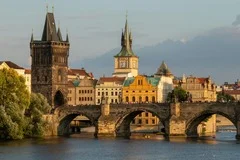
Charles Bridge and Old Town: Charles Bridge (Karlův most, 1357-1402) connects Old Town and Lesser Quarter - 516m pedestrian bridge, 30 Baroque statues (St. John of Nepomuk most famous - touch brass plaque for luck and return to Prague), street artists, musicians, vendors, towers at both ends with views. Cross early morning (sunrise, 6-7am) avoiding crowds - magical experience. Old Town Square (Staroměstské náměstí) is Prague's heart - Astronomical Clock (1410, hourly show with apostles 9am-9pm, crowds gather), Týn Church (Gothic twin spires), St. Nicholas Church (Baroque interior), Jan Hus Memorial, colorful buildings, outdoor cafés. Climb Old Town Hall tower for panoramic views. Winding medieval streets around square (Celetná, Karlova) lead to Charles Bridge - shops, restaurants, architecture. Prague's Old Town is pedestrian-friendly, compact, extraordinarily preserved - fairy-tale quality justifying 'Golden City' nickname.
Jewish Quarter (Josefov): Prague's former Jewish ghetto (between Old Town Square and Vltava) preserves synagogues and cemetery - moving testament to 1,000-year Jewish presence. Old Jewish Cemetery (1439-1787) has 12,000 gravestones layered (Jewish law prohibits removing graves, bodies buried in layers up to 12 deep) - atmospheric, historic. Spanish Synagogue (Moorish interior), Pinkas Synagogue (Holocaust memorial - walls inscribed with 80,000 Czech Jewish victims' names), Old-New Synagogue (Europe's oldest active synagogue, 1270, Gothic). Franz Kafka born in Josefov - statue near Spanish Synagogue. Jewish Museum ticket covers synagogues and cemetery. Allow 2-3 hours. Prague's Jewish heritage significant despite Holocaust decimating community (90% perished). Quarter now expensive real estate - designer shops, restaurants, but history preserved.
Czech Beer Culture: Czechs invented lager (Pilsner Urquell from Plzeň, 1842) and consume most beer per capita globally (140L/year/person). Prague has legendary beer culture - countless pubs (hospoda/pivnice), beer halls, gardens. Historic pubs: U Fleků (1499, dark lager brewed on-site, atmospheric halls, touristy but authentic), U Zlatého tygra (Golden Tiger, Havel's regular pub, locals-focused, cheap), Lokál (modern chain maintaining traditions, excellent beer, Czech food). Beer types: světlé (pale lager - most common), tmavé (dark lager), nefiltované (unfiltered). Half-liter standard. Beer cheaper than water. Beer halls serve hearty Czech food - svíčková (beef in cream sauce with dumplings), guláš, smažený sýr (fried cheese), pork knee. Pub etiquette: mark beer mat when you want another, settle tab when leaving. Beer is Czech culture - socializing, relaxation, pride. Brewery tours available (Pilsner Urquell in Plzeň, 90 minutes from Prague).
Lesser Quarter and Petřín: Malá Strana (Lesser Quarter) below castle features Baroque palaces, churches, gardens, upscale restaurants - quieter than Old Town. St. Nicholas Church (Baroque masterpiece, concerts), Wallenstein Garden (palace gardens with peacocks, loggia), John Lennon Wall (graffiti tribute, constantly changing), Kampa Island (charming waterfront area with parks). Petřín Hill offers green escape - funicular railway ascends hill, Petřín Lookout Tower (mini Eiffel Tower, 299 steps, views), Mirror Maze, rose gardens, Strahov Monastery (library with frescoed Baroque hall, brewery restaurant with views). Lesser Quarter is romantic Prague - cobblestone streets, gas lamps, embassies in palaces, fewer tourists than Old Town.
New Town and Beyond: Nové Město (New Town, founded 1348 - 'new' relative to Old Town) contains Wenceslas Square (really boulevard, focal point of 1989 Velvet Revolution, National Museum at top currently renovated), shopping streets, Art Nouveau buildings (Municipal House with Smetana Hall, concerts). Vyšehrad (fortress south of center) offers river views, cemetery with famous Czechs (Dvořák, Mucha, Čapek), Romanesque rotunda, beer garden - locals' favorite, fewer tourists. Dancing House (Gehry's modern architecture, controversial, café/gallery). Prague 2 (Vinohrady, Žižkov) has trendy restaurants, bars, residential charm. Day trips: Kutná Hora (1 hour, medieval town, Sedlec Ossuary bone church, St. Barbara's Cathedral), Karlštejn Castle (40 minutes, Gothic castle in forest, popular).
Practical Prague: Prague is safe, walkable, affordable - excellent public transport (metro, trams, buses - 24/72-hour passes), English increasingly common especially among young. Czech koruna (CZK) currency (1€ = 25 CZK approximately) - use local currency, avoid exchange booths in tourist areas (poor rates). Peak season April-October, Christmas (markets November-December). Summer crowded (30°C+). Spring/fall ideal (mild, fewer crowds). Winter cold (0°C) but atmospheric - Christmas markets, snow-dusted architecture. Tourist traps: overpriced exchange bureaus, restaurants on main squares (eat side streets), taxi scams (use Uber/Bolt, public transport). Old Town and Castle extremely crowded midday - visit early morning or evening. Prague changed dramatically since 1989 - capitalism, tourism, gentrification - locals sometimes frustrated with overcrowding. Still magical, affordable, beautiful - allow 3-4 days minimum.
Frequently Asked Questions
· If a transfer is canceled less than 36 hours prior to a transfer time, we will keep the prepaid amount and a refund will not be processed
· The refund process will not be executed for cancellations received less than 36 hours before the scheduled transfer time. In these situations, we will email you a cancellation note that can be used in order to settle the costs from your tour operator, airline, or travel insurance company
· If a flight is delayed for more than an hour, we would need to check our availability first
· Please, keep in mind if we are unable to complete a transfer in which a flight is delayed for more than an hour, Jam Transfer is not responsible if a transfer was not completed and will act in accordance with our Terms and Conditions