Cologne Bonn Airport (Konrad Adenauer) Airport Transfer Options: Your Gateway to Rhineland's Cultural Capital
Cologne Bonn Airport serves Germany's fourth-largest city and Rhineland metropolitan region. This western German hub welcomes visitors to historic Cologne with iconic Gothic Cathedral (UNESCO World Heritage), Rhine River promenades and bridges, Romanesque churches and Roman heritage, Kölsch beer culture and brewhouses, Carnival celebrations (largest in Germany), Museum Ludwig modern art, proximity to Bonn (former West German capital), and gateway to Rhine Valley wine region. Located 15 kilometers southeast of Cologne city center, Konrad Adenauer Airport provides excellent connections to western Germany.
Popular Transfer Routes from Cologne Bonn Airport (Konrad Adenauer) Airport
Choose from our most popular transfer destinations:
Private transfers provide the ultimate convenience and comfort for traveling from Cologne Bonn Airport (Konrad Adenauer) Airport to your destination. Your professional driver will meet you at arrivals with a personalized sign, assist with your luggage, and transport you directly to your hotel in a modern, comfortable vehicle.
- Direct door-to-door service to any Cologne destination
- No waiting or shared stops
- Professional German/English-speaking drivers
- Fixed, transparent pricing with no hidden fees
- Available 24/7 throughout the year
- Air-conditioned comfort
- Child seats and special requirements accommodated
- Drivers with excellent Cologne and Rhineland knowledge
- Luxury vehicles available (Premium and First Class)
- Ideal for business travelers and families
- Perfect for travelers with luggage
- Service to Bonn and Rhine Valley available
- Premium service at higher cost than public transport
- Advance booking recommended during Carnival
- Night surcharges may apply (22:00-06:00)
JamTransfer specializes in premium Cologne Bonn Airport (Konrad Adenauer) airport transfers throughout Cologne and Rhineland region.
S-Bahn Line S19 provides fast connection to Cologne.
- Direct to Hauptbahnhof (Central Station) - 15 minutes
- Very affordable (€3 single ticket)
- Frequent departures (every 20 minutes)
- Operates early morning to late night
- Hauptbahnhof adjacent to cathedral
- Reliable German efficiency
- Best value for solo travelers
- Journey time approximately 15 minutes
- May require additional connections for hotels
- Challenging with heavy luggage and stairs
- Can be crowded during rush hours
Airport express bus SB60 supplements the S-Bahn connection.
- Alternative to train service
- Direct to various city stops
- Good luggage space
- Slower than S-Bahn (traffic dependent)
- Less frequent departures
- S-Bahn generally superior option
- Multiple stops increase journey time
Official taxis are available at designated airport ranks.
- No advance booking required
- Direct transport to any destination
- Available for immediate departure
- Regulated metered service
- German reliability
- Expensive - typically €35-45 to city center
- Meter pricing subject to traffic
- Surcharges for luggage and night service
- Wait times during peak arrivals
- No price guarantee until arrival
For guaranteed service with fixed pricing, book your Cologne airport transfer online in advance through JamTransfer.
Car rental is available at Cologne Bonn Airport (Konrad Adenauer) Airport with major companies.
- Perfect for exploring Rhine Valley
- Visit Rhine castles and wine villages
- Good for Eifel National Park
- Drive to Burg Eltz castle
- Access to Aachen, Bonn, Düsseldorf
- Cost-effective for groups
- NOT recommended for Cologne city only
- Excellent public transport for city
- Parking expensive and difficult downtown
- S-Bahn connection very convenient
- Environmental zones require green badge
Hotel shuttles are offered by some Cologne hotels.
- Available at some upscale hotels
- Sometimes included in room rate
- Direct service to accommodation
- Must arrange in advance through hotel
- Limited to hotels offering service
- Limited departure times
- Often additional cost
- S-Bahn so convenient makes shuttles less necessary
Why Choose JamTransfer for Your Cologne Bonn Airport (Konrad Adenauer) Airport Transfer?
At JamTransfer.com, we understand Rhineland culture and hospitality:
- ✓ Personalized meet and greet at arrivals
- ✓ Professional drivers with Cologne and Rhine knowledge
- ✓ German and English-speaking drivers
- ✓ Fixed transparent pricing
- ✓ 24/7 customer support
- ✓ Free cancellation up to 36 hours before
- ✓ Child seats available
- ✓ Comfortable air-conditioned vehicles
- ✓ Premium and First Class luxury options
- ✓ Service to Bonn and Rhine Valley
- ✓ Local recommendations for brewhouses, cathedral, Carnival
Special Considerations for Cologne Bonn Airport (Konrad Adenauer) Airport Transfers
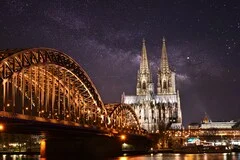
Cologne Cathedral and Gothic Masterpiece: Kölner Dom (Cologne Cathedral, 1248-1880 construction 632 years, twin spires 157m - tallest twin-spired church globally, UNESCO World Heritage 1996, Gothic architecture pinnacle, 10,000+ visitors daily, 4 million annually, Germany's most-visited landmark) dominates Cologne - visible from Rhine bridges, trains arriving, city skyline. Cathedral history: started 1248 housing Three Kings reliquary (Magi relics allegedly from Milan 1164), construction halted 1560s Reformation/funding exhaustion, incomplete stump remained 300 years, Romantic nationalism 19th century revived project (German unification symbolism), completed 1880 original Gothic plans. Cathedral survived WWII miraculously - 14 bombs hit but structure stood while surrounding Cologne destroyed 90%, iconic photograph 1945 cathedral towers amid rubble symbolizing endurance. Visiting: free entry (donations encouraged), South Tower climb €6 (533 steps, no elevator, panoramic views Rhine/city, claustrophobic spiral stairs, fitness required), treasury/crypt separate tickets, Mass daily (visitors welcome but respectful silence mandatory). Cathedral details overwhelming - stained glass windows (medieval originals, Gerhard Richter 2007 abstract window controversy), High Altar 1322, Shrine of Three Kings gold reliquary, Gero Cross 970 oldest large crucifix Northern Europe, choir stalls carved oak. Cathedral square (Domplatte) always busy - tourists, locals, street performers, Christmas markets December. Cologne identity inseparable from Dom - locals 'Kölsche' (Cologne dialect speakers) protective, cathedral symbol city pride, even atheists revere as cultural heritage. Cathedral restoration ongoing perpetually - sandstone deterioration pollution, funds from church tax/donations, scaffolding somewhere always visible.
Cologne Old Town and Rhine Promenade: Altstadt (Old Town, west bank Rhine, reconstructed post-WWII 90% destruction, colorful Rhineland houses, narrow lanes, brewhouses concentration, squares Alter Markt/Heumarkt) centers Cologne social life. Reconstruction debate familiar - authentic vs Disney, pragmatism won (quick rebuild 1950s, modern interiors behind historic facades, criticized but functional). Rhine promenade (Rheinuferpromenade, riverside walkway, beer gardens, boats, cyclists/joggers, Rheingarten parks, Hohenzollern Bridge - pedestrian/train bridge covered love locks estimated 40,000+ locks/2 tons weight, couples attach leaving keys Rhine tradition, bridge handles weight structurally, city tolerates romantic gesture) is Cologne living room - evening strolls, summer packed, Rhine shipping passes (barges, cruise ships, container vessels). Twelve Romanesque churches (Zwölf romanische Kirchen, 10th-13th centuries, basilica/architectural variations, survived WWII variably, St. Gereon/St. Maria im Kapitol/Groß St. Martin most significant) showcase Cologne's Roman-era Christianity roots - churches predate cathedral, Romanesque simplicity contrasts Gothic exuberance, often overlooked tourists fixated Dom but architecture enthusiasts treasure. Roman heritage visible: Römisch-Germanisches Museum (artifacts displayed in-situ including Dionysos Mosaic 3rd century AD floor, Roman glass, sculpture, daily life objects), Roman tower fragments city walls, underground archaeological sites. Cologne founded 38 BC Roman Colonia Agrippina (Emperor Claudius' wife birthplace elevated status), provincial capital Germania Inferior, prosperity trade/military, medieval importance continued Hanseatic League/archbishopric.
Kölsch Beer and Brewhouse Culture: Kölsch (Cologne beer, top-fermented, light pale ale, served 0.2L glasses stange skinny cylindrical, Kölsch Convention 1986 - only breweries Cologne region can use name, 24 breweries produce, €2-3 per glass, waiter Köbes replaces empty automatically until you place coaster on top signaling stop) is Cologne identity liquid form - locals drink exclusively, defending against Düsseldorf Altbier rivalry intense. Brewhouses (Brauhaus, traditional taverns, wood-paneled, communal tables, serve Kölsch with Rhineland food, loud/convivial atmosphere, tourists/locals mix) essential Cologne experience. Famous brewhouses: Früh am Dom (cathedral square, touristy but authentic, massive portions), Gaffel am Dom, Sünner im Walfisch, Brauhaus Sion (locals' favorite, traditional), Päffgen (copper vats visible, since 1883). Etiquette: Köbes (waiter, traditional Cologne character, gruff/efficient, blue apron, wooden Kranz tray holding glasses, tallies beer on coaster with pen marks - honor system, no tipping pressure but round up appreciated), order food alongside beer (Himmel un Ääd 'Heaven and Earth' blood sausage/mashed potato/apple sauce, Halver Hahn 'half rooster' actually rye roll with cheese/mustard misleading name, Rheinischer Sauerbraten marinated beef, Reibekuchen potato pancakes). Drinking Kölsch ritual - small glasses require frequent refills (promoting moderation/freshness supposedly, reality: drinking more easily), standing/sitting mix, convivial toasts 'Prost,' singing traditional songs intoxication rising. Cologne-Düsseldorf rivalry legendary - 40km apart, Kölsch vs Altbier (dark top-fermented), football (FC Köln vs Fortuna Düsseldorf), cultural superiority debates, jokes mocking other, genuine hostility rare but banter constant. Carnival amplifies rivalry - Cologne's massive celebration vs Düsseldorf's (also large but overshadowed).
Carnival and Rhineland Traditions: Kölner Karneval (Cologne Carnival, November 11 at 11:11 season starts officially, culminates Rosenmontag Rose Monday parade February/March, week-long street party Weiberfastnacht-Ash Wednesday, millions participate, 'fifth season' Kölsche call it, equals Christmas importance locally) defines Cologne character - irreverent, joyful, democratic (everyone participates regardless class), permission for excess before Lenten sacrifice. Rosenmontag parade (Rose Monday, main event, 7km route through center, 10,000+ participants, elaborate floats satirizing politics/society, Kamelle candy thrown crowds, costumes mandatory spectators, 1 million+ attend, public transport free costumed riders, offices/schools closed) is organized chaos - locals prepare months (costumes, viewing spots claimed dawn, alcohol flowing early), tourists unprepared overwhelmed scale/enthusiasm. Carnival traditions: 'Alaaf' greeting/cheer (Cologne's, never 'Helau' which is Mainz/Düsseldorf - using wrong one provokes correction), costume compulsory (even bankers/police dress, creativity celebrated), political satire (floats mock Merkel/Trump/EU/local politicians, press freedom exercised vigorously), gender reversal Weiberfastnacht (women cut men's ties, kiss strangers, role reversal day), bands singing Kölsch dialect songs (Höhner, Bläck Fööss, locals know lyrics by heart). Carnival-abstaining minority exists - intellectual disdain ('foolish peasant tradition'), travelers escaping (Canary Islands popular Carnival week), Protestant minority less enthusiastic (Catholic tradition historically). Post-Carnival silence: Ash Wednesday city hungover, return to normality, visitors March-October miss spectacle but find calmer Cologne.
Museums and Culture: Cologne substantial museums - Museum Ludwig (Ludwig Chocolate magnate/collector donated, 20th/21st-century art, Picasso largest collection Germany, Pop Art, Russian Avant-Garde, photography, €13 entry, cathedral square location), Wallraf-Richartz Museum (medieval-19th century art, Cologne School Gothic paintings, Dutch Masters, Impressionists, €10), Romano-Germanic Museum (Roman artifacts in-situ, Dionysos Mosaic, glass, sculpture, archaeological Cologne), Chocolate Museum (Schokoladenmuseum, Lindt, 4,000m² exhibition chocolate history/production, tropical greenhouse cacao, chocolate fountain tasting, shop, Rhine promenade location, touristy but fun, €13.50). NS Documentation Center (EL-DE-Haus, Gestapo headquarters WWII, basement prison cells with prisoner inscriptions preserved, exhibitions Nazi crimes/resistance/Cologne persecution, sobering, free entry). Cologne Gay Museum (Schwules Museum, LGBTQ+ history, Cologne liberal/accepting historically). Culture: Philharmonie concert hall, opera house, theaters, Cologne Pride (CSD Christopher Street Day July, 1 million+ participants, one of Europe's largest), gallery scene Belgian Quarter (Belgisches Viertel, trendy neighborhood, art galleries, boutiques, cafés, gentrified). Cologne balances: traditional (Kölsch, brewhouses, cathedral, Carnival) with contemporary (art, nightlife, diversity, student population 100,000+).
Bonn and Rhine Valley: Bonn (25km south, 20 minutes train, West German capital 1949-1990 until reunification, government district now international organizations/museums, Beethoven birthplace/museum, University, pleasant smaller city, underrated Cologne shadow) offers contrast - quiet, orderly, intellectual vs Cologne's exuberant/working-class energy. Rhine Valley wine region accessible - Rüdesheim/Assmannshausen (70km south, terraced vineyards, wine taverns, Niederwald Monument), Koblenz (100km, confluence Rhine/Moselle, Ehrenbreitstein Fortress cable car), Rhine castles (Marksburg, Rheinfels, Burg Eltz - arguably Germany's most beautiful castle 140km southwest, medieval perfection hilltop forest). Rhine cruises popular - KD Line day trips Cologne-Koblenz return (5-6 hours each way, scenic but long, wine tasting onboard, summer packed). Aachen (70km west, 1 hour train, Charlemagne's capital, cathedral UNESCO treasury/throne/chapel octagon, spa town, Belgian/Dutch borders, Christmas market famous). Düsseldorf (40km north, 30 minutes train, rival city, Altstadt 'longest bar in world' (260+ bars/brewhouses in Old Town), Königsallee shopping, Rhine Tower, modern/wealthy contrast Cologne's traditional/gritty). Cologne's position - Rhine corridor midpoint Ruhr-Frankfurt, North-South trade route, Rhineland heart - makes it ideal base exploring region. Day trips easily managed - trains frequent/punctual, distances short.
Practical Cologne: Cologne is moderately expensive - cheaper than Munich/Frankfurt, similar Hamburg/Düsseldorf, more expensive than eastern Germany. Euro currency. German language (English widely spoken young people/tourism, Turkish/Arabic significant immigrant communities). Public transport excellent - U-Bahn (underground), S-Bahn (regional trains), trams, buses, integrated VRS ticketing (€3 single inner city, €9 day pass, validate machine). Airport connection: S-Bahn S19 to Hauptbahnhof (Central Station, 15 minutes, frequent departures every 20 minutes, €3), fastest option. Walking central Cologne feasible - Old Town/cathedral/Rhine compact, bridges crossing, flat terrain. Peak season: July-August (20-30°C, busy, festivals, beer gardens), December (Christmas markets, cold 0-5°C but magical), Carnival (February/March, chaotic/fun, book hotels year ahead). Spring/fall pleasant (15-20°C, fewer tourists). Cologne transformed post-WWII - 90% destroyed bombing (Operation Millennium 1942 thousand-bomber raid, 70% city obliterated war end), rebuilt 1950s-80s (functional not beautiful, criticized architecture but pragmatic), reunification 1990 returned Berlin capital status (some Bonn ministries stayed, Cologne absorbed government workers, growth continued). Modern Cologne: 1 million city (1.1 million, fourth-largest Germany), diverse (20%+ foreign nationals, Turkish largest minority, Syrian refugees 2015+), economically strong (media, insurance, chemicals, automotive Ford factory), liberal (Green Party stronghold, LGBTQ-friendly, progressive politics), proud (Kölsche identity fierce, dialect spoken, cathedral/Carnival/Kölsch defining). Cologne challenges: cost of living rising (gentrification Belgian Quarter/Ehrenfeld), traffic congestion, housing shortages. Despite issues, Cologne remains liveable, friendly, authentic - contrast to Munich's sterile perfection or Frankfurt's financial coldness, Cologne keeps working-class warmth, approachability, 'jeck' (Kölsch for crazy/fun-loving) mentality. Three days recommended - cathedral, Old Town, brewhouses, museums, Rhine walk, possible Bonn/Rhine Valley day trip. Cologne delivers: history, beer, culture, friendliness, German authenticity without Bavaria's tourist clichés.
Frequently Asked Questions
· If a transfer is canceled less than 36 hours prior to a transfer time, we will keep the prepaid amount and a refund will not be processed
· The refund process will not be executed for cancellations received less than 36 hours before the scheduled transfer time. In these situations, we will email you a cancellation note that can be used in order to settle the costs from your tour operator, airline, or travel insurance company
· If a flight is delayed for more than an hour, we would need to check our availability first
· Please, keep in mind if we are unable to complete a transfer in which a flight is delayed for more than an hour, Jam Transfer is not responsible if a transfer was not completed and will act in accordance with our Terms and Conditions