Tallinn Airport (Lennart Meri) Airport Transfer Options: Your Gateway to Estonian Capital and Digital Nation
Tallinn Airport serves Estonia's medieval capital and tech hub. This Baltic gateway welcomes visitors to enchanting Tallinn with UNESCO Old Town medieval walls, digital innovation and e-residency, Kadriorg Palace and park, Seaplane Harbour maritime museum, Telliskivi Creative City hipster quarter, proximity to Lahemaa National Park, ferry connections to Helsinki Finland, and gateway to the most advanced digital society in Europe. Located just 4 kilometers from Tallinn city center, Lennart Meri Airport provides the closest airport-to-city connection in Europe.
Popular Transfer Routes from Tallinn Airport (Lennart Meri) Airport
Choose from our most popular transfer destinations:
Private transfers provide the ultimate convenience and comfort for traveling from Tallinn Airport (Lennart Meri) Airport to your destination. Your professional driver will meet you at arrivals with a personalized sign, assist with your luggage, and transport you directly to your hotel in a modern, comfortable vehicle.
- Direct door-to-door service to any Tallinn destination
- No waiting or shared stops
- Professional Estonian/English-speaking drivers
- Fixed, transparent pricing with no hidden fees
- Available 24/7 throughout the year
- Air-conditioned comfort
- Child seats and special requirements accommodated
- Drivers with excellent Tallinn knowledge
- Luxury vehicles available (Premium and First Class)
- Ideal for business travelers and families
- Perfect for travelers with luggage
- Only 4km distance - quick arrival
- Premium service at higher cost than public transport
- Advance booking recommended
- Night surcharges may apply (22:00-06:00)
JamTransfer specializes in premium Tallinn Airport (Lennart Meri) airport transfers throughout Tallinn and Estonia.
Tram Line 4 provides direct connection to Tallinn center.
- Direct to city center - 15 minutes
- Very affordable (€2 single ticket)
- Frequent departures (every 10 minutes)
- Operates 6am to midnight
- Convenient stops near Old Town
- Best value for solo travelers
- Closest airport-tram connection in Europe
- May require walking to hotel from tram stop
- Can be crowded during rush hours
- Challenging with heavy luggage
- Limited late night service after midnight
Bus Line 2 also connects airport to city.
- Alternative to tram
- Same affordable price (€2)
- Different route through city
- Slightly slower than tram
- Less frequent departures
- Tram generally preferred option
Official taxis are available at designated airport ranks.
- No advance booking required
- Direct transport to any destination
- Available for immediate departure
- Very short distance (4km only)
- Regulated metered service
- Approximately €10-15 to city center
- Use official taxi ranks only
- App-based taxis (Bolt) often cheaper
- Variable English proficiency
For guaranteed service with fixed pricing, book your Tallinn airport transfer online in advance through JamTransfer.
Car rental is available at Tallinn Airport (Lennart Meri) Airport with major companies.
- Perfect for exploring Estonia
- Visit Lahemaa National Park
- Freedom for Tartu and Parnu trips
- Drive to Latvia/Lithuania
- Access to countryside and nature
- Cost-effective for groups
- NOT recommended for Tallinn city only
- Excellent public transport for city
- Parking difficult and expensive in Old Town
- Winter driving challenging (snow/ice)
- Tram/walking best for city center
Hotel shuttles are offered by some Tallinn hotels.
- Available at some upscale hotels
- Sometimes included in room rate
- Direct service to accommodation
- Must arrange in advance through hotel
- Limited to hotels offering service
- Limited departure times
- Often additional cost
- Tram so close and cheap makes shuttles unnecessary
Why Choose JamTransfer for Your Tallinn Airport (Lennart Meri) Airport Transfer?
At JamTransfer.com, we understand Estonian efficiency:
- ✓ Personalized meet and greet at arrivals
- ✓ Professional drivers with Tallinn knowledge
- ✓ Estonian and English-speaking drivers
- ✓ Fixed transparent pricing in euros
- ✓ 24/7 customer support
- ✓ Free cancellation up to 36 hours before
- ✓ Child seats available
- ✓ Comfortable air-conditioned vehicles
- ✓ Premium and First Class luxury options
- ✓ Service to all Tallinn areas and Estonia
- ✓ Local recommendations for Old Town, museums, restaurants
Special Considerations for Tallinn Airport (Lennart Meri) Airport Transfers
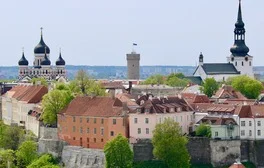
Old Town Medieval Perfection: Tallinn's Old Town (Vanalinn) is Northern Europe's best-preserved medieval city. The defensive walls stretch 2 kilometers with 26 towers still standing - you can walk sections for dramatic views. Town Hall Square centers the Lower Town with its Gothic spire and merchants' houses painted in pastels.
Climbing Toompea Hill reveals the Upper Town where nobility ruled. Alexander Nevsky Cathedral's onion domes dominate, built 1900 to assert Russian Orthodox presence. The viewpoint platforms offer postcard vistas over red-tiled roofs descending to the Baltic Sea. Narrow cobblestone streets like Katariina Passage hide artisan workshops.
Unlike many European cities that rebuilt after wars, Tallinn's medieval core survived intact. The result feels authentic rather than reconstructed. Summer brings crowds and medieval festivals. Winter transforms it into a fairy tale with Christmas markets and snow-dusted towers. Three hours covers the highlights, but the maze of streets rewards wandering.
Digital Estonia and E-Residency: Estonia leads the world in digital governance. Citizens vote online, file taxes in minutes, and access government services through a single platform. The country pioneered e-residency, allowing anyone globally to establish an Estonian company remotely and access EU business infrastructure.
Skype originated in Tallinn in 2003, setting the tone for tech innovation. Startup culture thrives in Telliskivi Creative City and Lift99 coworking spaces. The government maintains digital transparency - even parking is handled through apps, and paper is nearly eliminated from bureaucracy.
This digital-first approach stems from independence in 1991 when Estonia built systems from scratch. With only 1.3 million people, the small nation punches above its weight in innovation. Visitors notice this through contactless everything, digital museum tickets, and WiFi coverage that extends to forests.
Telliskivi and Creative Quarter: Telliskivi Creative City occupies former industrial buildings transformed into studios, cafés, vintage shops, and street food markets. The complex hosts Estonia's hipster culture - craft beer breweries, design stores, weekend flea markets, and live music venues. Graffiti art covers walls legally, creating an outdoor gallery.
F-Hoone restaurant exemplifies the vibe - industrial chic with communal tables, weekend brunches, and local ingredients. Neighboring PROTO invention factory offers hands-on workshops. The Balti Jaama Turg market hall sells everything from organic produce to handmade goods. This area shows modern Estonian creativity beyond medieval tourism.
Kalamaja neighborhood extends the creative zone with wooden houses painted colorfully. Once working-class, it's now gentrified with young families and artists. The seaside promenade connects to Seaplane Harbour museum. This Tallinn contrasts sharply with Old Town's medieval preservation.
Kadriorg and Museums: Kadriorg Park, created by Peter the Great in 1718, offers baroque gardens and palace. The Kadriorg Palace houses foreign art while KUMU (Art Museum of Estonia) presents Estonian art in a striking modern building. The park provides escape from Old Town crowds with wooded paths, ponds, and the presidential palace.
Seaplane Harbour (Lennusadam) maritime museum occupies a massive seaplane hangar from 1916. Full-size ships, a submarine you can board, and interactive exhibits make it engaging beyond typical museums. The icebreaker Suur Tõll and submarine Lembit tell Estonia's maritime story through authentic vessels.
Estonian Open Air Museum preserves 18th-19th century rural architecture. Traditional farmhouses, windmills, and a wooden church relocated from across Estonia create a village frozen in time. In summer, costumed guides demonstrate historical crafts and cooking.
Day Trips and Region: Lahemaa National Park (70km east) showcases Estonia's nature - pine forests, rocky coastlines, and manor houses. Viru Bog's wooden boardwalk trail takes 1-2 hours through pristine wetlands. Palmse and Sagadi manor houses reveal Baltic German aristocratic life. The park makes an excellent day trip for nature lovers.
Helsinki sits just 80km across the Gulf of Finland - a 2-hour ferry ride. Tallinn-Helsinki is one of the world's busiest ferry routes with multiple daily departures. Many visitors combine both capitals in one trip, staying nights in cheaper Tallinn while day-tripping to expensive Helsinki.
Tartu (185km south, 2.5 hours) is Estonia's university town with student energy and intellectual heritage. Parnu (130km) offers beach resort atmosphere on the Baltic coast. Latvia's Riga is 310km (4 hours) for those touring the Baltics. Estonia's small size makes most destinations reachable as day trips.
Estonian Culture and Practicality: Estonians value personal space and quiet contemplation - similar to Finns in reserved temperament. Small talk with strangers is uncommon, but people warm up once trust develops. English is widely spoken, especially by younger generations. Russian is understood by many but politically sensitive post-Soviet occupation.
Estonian cuisine features black bread, Baltic herring, and hearty stews. Vana Tallinn liqueur appears in cocktails and desserts. Modern restaurants blend traditional ingredients with Nordic new cuisine. Prices are moderate - meals €12-20, beer €4-5, hotels €60-120. The euro is currency.
Public transport includes buses and trams (€2 tickets). Tallinn Card offers free transport and museum entry. Walking works best for Old Town's pedestrian streets. Taxis are affordable and use meters reliably.
Weather varies dramatically by season. Summer (June-August) brings 18-hour daylight and temperatures around 20-25°C. Winter is dark (6-hour days) and cold (-5 to -10°C) but atmospheric with snow. Spring and autumn are brief transitional periods. Two days minimum covers Tallinn's highlights; three days allows museums and relaxed exploring.
Frequently Asked Questions
· If a transfer is canceled less than 36 hours prior to a transfer time, we will keep the prepaid amount and a refund will not be processed
· The refund process will not be executed for cancellations received less than 36 hours before the scheduled transfer time. In these situations, we will email you a cancellation note that can be used in order to settle the costs from your tour operator, airline, or travel insurance company
· If a flight is delayed for more than an hour, we would need to check our availability first
· Please, keep in mind if we are unable to complete a transfer in which a flight is delayed for more than an hour, Jam Transfer is not responsible if a transfer was not completed and will act in accordance with our Terms and Conditions