Skopje Airport to Pristina Transfer Service
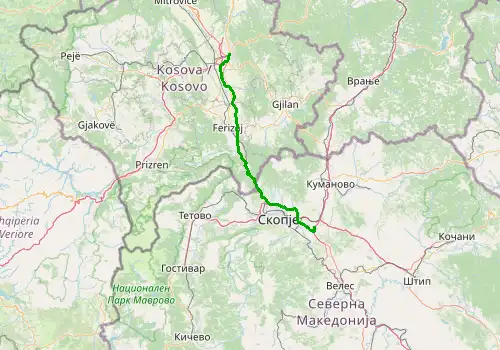
Travelling to Pristina from Skopje Airport (SKP)? Begin your journey in comfort with our professional Skopje Airport to Pristina transfer service. We provide direct private transportation from Skopje Airport to Pristina -- 113 kilometres in approximately 88 minutes -- with a professional driver confirmed and waiting at arrivals.
Why Choose Our Skopje Airport to Pristina Taxi Service?
Skopje Alexander the Great Airport connects arriving visitors to the statue-filled capital Skopje, the Painted Mosque of Tetovo, the volcanic towers of Kratovo, the ski slopes of Mavrovo National Park, the double-UNESCO shores of Ohrid, the poetry capital of Struga, the consular elegance of Bitola, and the youthful energy of Pristina. Our Skopje Airport to Pristina private transfer delivers you directly -- confirmed, comfortable and door-to-door.
Premium Service Features:
- Meet & Greet Service: Your driver waits at arrivals with a personalised name sign
- Flight Monitoring: We track your flight automatically and adjust for any delay
- Fixed Transparent Pricing: Know your exact cost upfront -- no meter, no surcharges
- Modern, Comfortable Vehicles: Air-conditioned, GPS-equipped fleet with full luggage capacity
- Free Cancellation: Cancel up to 48 hours before your transfer at no charge
- 24/7 Customer Support: Our team is available around the clock
- Child Safety Seats: Available on request at no extra charge
- English-Speaking Drivers: Clear communication and local knowledge throughout
Other Transport Options from Skopje Airport to Pristina
- Bus (Skopje to Pristina, regular intercity services): Regular buses connect Skopje to Pristina in approximately 1h45m-2h15m -- connection from airport required.
- Private Transfer (Direct): Our direct private transfer from Skopje Airport to Pristina takes approximately 88 minutes via E65. Fixed price, door-to-door. Passport and relevant entry documents required at the Kosovo border.
- Car Rental: Car hire at Skopje Airport for Pristina is practical -- verify car hire company Kosovo cross-border policies before booking. Approximately 78 minutes.
- Taxi: Taxis from Skopje Airport to Pristina cost approximately 4,000-5,500 MKD or equivalent. Border crossing time may vary. Our private transfer provides a confirmed fixed price.
Our private transfer from Skopje Airport to Pristina provides the most direct, comfortable and reliable connection -- door to door, fixed price, no connections.
About Pristina
Pristina is the capital of Kosovo -- the youngest state in Europe, whose independence declared on 17 February 2008 has been recognised by over 100 countries including the United States and most EU member states, though Kosovo's international status remains subject to ongoing diplomatic processes and UN Security Council Resolution 1244 -- a city of 215,000 inhabitants 113km north of Skopje Airport on the Pristina plain, whose extraordinary combination of the Newborn Monument (the most internationally celebrated single public art installation in the post-Yugoslav space -- the NEWBORN letters erected on the day of Kosovo's declaration of independence, repainted every year since 2008 to reflect a different theme, the most symbolically charged single object in Kosovo and the most internationally photographed monument in Pristina, the most direct expression of the aspirations of the youngest European state in any single sculptural form), the National Library of Kosovo (the most architecturally controversial and most internationally discussed building in Kosovo -- the 1982 building by Croatian architect Andrija Mutnijakovic, described as one of the most extraordinary examples of Brutalist architecture in southeastern Europe, its extraordinary facade of 99 domes and metal mesh curtain walls the most immediately striking single building in Pristina, the most frequently cited architectural curiosity in the Balkans) and the extraordinary energy and optimism of a capital city with the youngest demographic in Europe (Kosovo has the youngest population in all of Europe, giving Pristina the most youthful urban energy and the most forward-looking cultural atmosphere of any Balkan capital) give it a contemporary political and cultural identity of unique fascination.
Pristina's most important historical and cultural heritage is the Gracanica Monastery (10km south -- the most magnificently preserved Serbian Orthodox medieval monastery in Kosovo, built 1315-1321 by King Stefan Milutin, its extraordinary five-domed Byzantine structure the most completely intact and most artistically distinguished medieval Serbian monastery in Kosovo, a UNESCO World Heritage Site as part of the Medieval Monuments in Kosovo nomination, its 14th-century frescoes the most completely preserved medieval Serbian fresco programme in the country, the most important single Serbian Orthodox monument in Kosovo) and the Imperial Mosque of Pristina (the most important and most completely preserved Ottoman mosque in Kosovo -- the Careva Dzamija, built in the 15th century, the oldest surviving mosque in Pristina, the most historically significant single Ottoman religious monument in the capital). The Kosovo Museum (the most important single archaeological and historical collection in Kosovo, documenting the extraordinary prehistoric, Illyrian, Roman, Byzantine, medieval Serbian and Ottoman heritage of the territory), the thriving bar and cafe culture of Mother Teresa Square (the most vibrant and most internationally diverse cafe scene in any post-Yugoslav capital of its size) and the Kosovo Specialist Chambers context give Pristina a political and memorial complexity of the most serious contemporary European significance.
Important Transfer Information
Newborn Monument -- Most Internationally Celebrated Post-Yugoslav Public Art Installation, Most Symbolically Charged Object in Kosovo, Repainted Every Year Since Independence (2008): The NEWBORN Monument (erected 17 February 2008 on Kosovo's independence declaration day, repainted annually with a new theme since 2008 -- the most internationally photographed single monument in Pristina, the most symbolically charged public art installation in post-Yugoslav space, the most direct sculptural expression of the aspirations of Europe's youngest state) gives Pristina a contemporary political artistic identity of unique importance in post-war European political geography.
Gracanica Monastery -- UNESCO World Heritage, Most Magnificently Preserved Serbian Orthodox Medieval Monastery in Kosovo, 14th-Century Frescoes: The Gracanica Monastery (10km south, UNESCO World Heritage, built 1315-1321 by King Stefan Milutin -- the most magnificently preserved Serbian Orthodox medieval monastery in Kosovo, five-domed Byzantine structure, 14th-century frescoes -- the most completely preserved medieval Serbian fresco programme in Kosovo) gives the Pristina area a medieval heritage of world art-historical significance as the most distinguished Serbian Orthodox monument in the territory.
E65 North Kosovo Transfer -- 88 Minutes. Note: Kosovo's status is subject to UN Security Council Resolution 1244. Please verify current entry requirements before travel.: The transfer from Skopje Airport to Pristina takes approximately 88 minutes via the E65 motorway north -- through the Kacanik gorge and into the Kosovo plain. Visitors should verify current border crossing and visa/entry requirements for Kosovo prior to travel, as applicable regulations vary by nationality.
Book Your Transfer Now
Secure your comfortable, reliable journey from Skopje Airport to Pristina with JamTransfer today.
Visit JamTransfer.com for transfers from Skopje Airport throughout North Macedonia and the region.
Frequently Asked Questions
· If a transfer is canceled less than 36 hours prior to a transfer time, we will keep the prepaid amount and a refund will not be processed
· The refund process will not be executed for cancellations received less than 36 hours before the scheduled transfer time. In these situations, we will email you a cancellation note that can be used in order to settle the costs from your tour operator, airline, or travel insurance company
· If a flight is delayed for more than an hour, we would need to check our availability first
· Please, keep in mind if we are unable to complete a transfer in which a flight is delayed for more than an hour, Jam Transfer is not responsible if a transfer was not completed and will act in accordance with our Terms and Conditions