Strasbourg Airport (Entzheim) Airport Transfer Options: Your Gateway to Alsace and European Capital
Strasbourg Airport serves France's Alsatian capital and seat of European institutions. This Franco-German border hub welcomes visitors to historic Strasbourg with Grande Île UNESCO World Heritage, Gothic Cathedral and Astronomical Clock, Petite France canals and half-timbered houses, European Parliament and institutions, Alsatian wine route and cuisine, Christmas markets (Europe's oldest), and gateway to Black Forest and Rhine Valley. Located 10 kilometers southwest of Strasbourg city center at Entzheim, the airport provides excellent access to Alsace region.
Popular Transfer Routes from Strasbourg Airport (Entzheim) Airport
Choose from our most popular transfer destinations:
Private transfers provide the ultimate convenience and comfort for traveling from Strasbourg Airport (Entzheim) Airport to your destination. Your professional driver will meet you at arrivals with a personalized sign, assist with your luggage, and transport you directly to your hotel in a modern, comfortable vehicle.
- Direct door-to-door service to any Strasbourg destination
- No waiting or shared stops
- Professional French/English-speaking drivers
- Fixed, transparent pricing with no hidden fees
- Available 24/7 throughout the year
- Air-conditioned comfort
- Child seats and special requirements accommodated
- Drivers with excellent Strasbourg and Alsace knowledge
- Luxury vehicles available (Premium and First Class)
- Ideal for families and business travelers
- Perfect for travelers with luggage
- Service to wine route villages and Germany
- Premium service at higher cost than public transport
- Advance booking recommended during Christmas markets
- Night surcharges may apply (22:00-06:00)
JamTransfer specializes in premium Strasbourg Airport (Entzheim) airport transfers throughout Strasbourg and Alsace region.
Train connection via shuttle bus and TER regional train.
- Shuttle bus to Entzheim-Aéroport station (5 minutes)
- TER train to Gare Centrale (9 minutes)
- Total journey approximately 20 minutes
- Affordable (€4.70 total)
- Frequent departures (every 15-30 minutes)
- Direct to city center train station
- Requires two connections (bus + train)
- Challenging with heavy luggage
- Coordination between shuttle and train needed
- May require tram connection for final destination
Direct bus Line A connects airport to Strasbourg center.
- Direct to city center - 15 minutes
- Very affordable (€2.50 single ticket)
- No transfers required
- Regular departures
- Simpler than train option
- Journey time 15-25 minutes depending on traffic
- Can be crowded during peak times
- Limited luggage space when full
- Less frequent than train
Official taxis are available at designated airport ranks.
- No advance booking required
- Direct transport to any destination
- Available for immediate departure
- Regulated metered service
- Approximately €35-45 to city center
- Meter pricing subject to traffic
- Surcharges for luggage and night service
- Wait times during peak arrivals
- No price guarantee until arrival
- Variable English proficiency
For guaranteed service with fixed pricing, book your Strasbourg airport transfer online in advance through JamTransfer.
Car rental is available at Strasbourg Airport (Entzheim) Airport with major companies.
- Essential for Alsace Wine Route exploration
- Freedom to visit Colmar, Riquewihr, wine villages
- Good for Black Forest day trips (Germany)
- Access to Vosges Mountains
- Cost-effective for groups
- Visit multiple wineries in one day
- NOT recommended for Strasbourg city center only
- Parking difficult and expensive in Grande Île
- Excellent tram system for city
- Pedestrian zones restrict access
- Designated driver needed for wine tours!
Hotel shuttles are offered by limited Strasbourg hotels.
- Available at some upscale hotels
- Sometimes included in room rate
- Direct service to accommodation
- Must arrange in advance through hotel
- Limited to hotels offering service
- Limited departure times
- Often additional cost
- Not widely available
Why Choose JamTransfer for Your Strasbourg Airport (Entzheim) Airport Transfer?
At JamTransfer.com, we understand Alsace and European Strasbourg:
- ✓ Personalized meet and greet at arrivals
- ✓ Professional drivers with Strasbourg and Alsace knowledge
- ✓ French and English-speaking drivers
- ✓ Fixed transparent pricing
- ✓ 24/7 customer support
- ✓ Free cancellation up to 36 hours before
- ✓ Child seats available
- ✓ Comfortable air-conditioned vehicles
- ✓ Premium and First Class luxury options
- ✓ Service to wine villages, Colmar, Black Forest
- ✓ Local recommendations for winstubs, Christmas markets, wineries
Special Considerations for Strasbourg Airport (Entzheim) Airport Transfers
Grande Île and Cathedral: Grande Île (Big Island, historic center bounded by River Ill canals, UNESCO World Heritage 1988 - entire city center not just monuments, first such designation, French-German architectural fusion) is Strasbourg's medieval heart. Strasbourg Cathedral (Cathédrale Notre-Dame, 1015-1439 Gothic masterpiece, 142m spire tallest medieval structure when completed, pink Vosges sandstone, astronomical clock 1843 showing planetary movements/calendar/religious scenes, Virgin's pillar Pilier des Anges sculptures, platform climb 332 steps panoramic views) dominates skyline - Victor Hugo called it 'gigantic and delicate marvel,' Goethe studied here. Cathedral square (Place de la Cathédrale) buzzes - tourists, Maison Kammerzell 1589 half-timbered house now restaurant, souvenir shops. Interior stunning - rose window, nave height (42m ceiling), stained glass, astronomical clock shows at 12:30pm daily (buy ticket advance). Cathedral represents Alsace history - French/German cultural synthesis, contested territory centuries, Gothic architecture peak. Nearby: Palais Rohan (1742 palace housing three museums - Fine Arts, Decorative Arts, Archaeological), Place Kléber (main square, Christmas market location, shops, cafés).
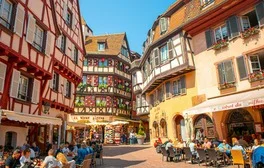
Petite France and Canals: Petite France (Little France, island quarter, half-timbered houses 16th-17th centuries, canals, locks, former tanners' district) is Strasbourg's most picturesque neighborhood - wooden-framed colorful buildings (colombages), flower boxes, waterways, bridges, Instagram paradise. Maison des Tanneurs (Tanners' House, 1572, now restaurant Gewürztraminer, traditional Alsatian food), Pont Couverts (three medieval towers, covered bridges formerly, now open), Barrage Vauban (Vauban Dam, 1686, defensive lock system, panoramic terrace free, views over Petite France/canals/cathedral). Petite France touristy but deservedly - genuinely beautiful, evening illuminations magical, boat tours (Batorama) departing along Ill River showing Petite France, European Quarter, locks. Strasbourg built on water - Romans named Argentoratum (silver fortress?), medieval importance from Rhine access, canals originally for mills/tanneries/fishing. Walking Petite France to cathedral (15 minutes) passes Gutenberg Square (printing press invented 1440 nearby Mainz, Gutenberg statue), Place du Marché aux Cochons de Lait (market squares), shopping streets (Rue des Hallebardes).
European Institutions and Quartier Européen: Strasbourg is European capital - European Parliament (hemicycle debating chamber, 751 MEPs, monthly plenary sessions - Brussels has committees, Strasbourg official seat despite controversy over cost/CO2 of monthly moves), European Court of Human Rights (47 Council of Europe members, protecting human rights convention, not EU institution despite confusion), Council of Europe (founded 1949, 46 members, separate from EU), European Ombudsman, Eurocorps military headquarters. Quartier Européen (European Quarter, northeast Grande Île across Ill, modern architecture - Louise Weiss building 1999 glass tower unfinished symbolizing EU construction ongoing, Agora building, Avenue de l'Europe) contrasts medieval center. Parliament visits possible (advance booking, identity required, free, hemicycle tours, exhibits) - attending debates requires MEP invitation. Strasbourg's European role historical - French-German border, symbolic reconciliation post-WWII, Schuman Declaration 1950 nearby, European integration embodiment. Controversies: Parliament split Brussels/Strasbourg wasteful (traveling circus, €114m annually, CO2 emissions, efficiency loss), MEPs prefer Brussels, French insist Strasbourg symbolic/treaty requirement. Visiting European Quarter shows EU machinery - interpreters, languages, bureaucracy, idealism, contradictions.
Alsatian Wine Route and Villages: Alsace Wine Route (Route des Vins d'Alsace, 170km north-south, 70+ villages, Vosges Mountains foothills, half-timbered villages, vineyards, wine cellars, storks' nests) is France's prettiest wine region. Strasbourg gateway - Obernai (30km south, medieval walls, fountains, wine cellars), Riquewihr (65km, fortified 16th-century village, postcard perfect, touristy but stunning), Colmar (75km, Alsace wine capital, Little Venice canals, Unterlinden Museum Isenheim Altarpiece, half-timbered old town), Eguisheim (circular medieval village, voted France's favorite village 2013), Kaysersberg (Schweitzer birthplace, castle ruins, Christmas market). Alsatian wines: Riesling (dry, mineral, ages well), Gewürztraminer (aromatic, spicy, lychee notes, pairs Munster cheese/foie gras), Pinot Gris (rich, full-bodied), Sylvaner (light, aperitif), Muscat (floral, dry unlike sweet Muscats elsewhere), Pinot Blanc (fresh, versatile), Crémant d'Alsace (sparkling, méthode champenoise, underrated). Grand Cru (50 vineyard sites, terroir-specific, quality), Vendanges Tardives (late harvest, sweet), Sélection de Grains Nobles (noble rot, rare dessert wines). Visiting: rent car (villages spread, public transport limited), bike (EuroVelo route), organized tours. Taste at caves cooperatives, domaines (wineries), winstubs (wine bars serving traditional food). Alsace wine distinct - Germanic grape varieties (Riesling), French winemaking, bottles tall/slender flûte shape, labels by grape not appellation (unlike Bordeaux/Burgundy), food-friendly versatility.
Alsatian Cuisine and Culture: Alsatian food reflects French-German fusion - hearty, rich, comforting. Specialties: choucroute garnie (sauerkraut with sausages/pork/potatoes, signature dish, massive portions), tarte flambée/flammekueche (thin pizza-like flatbread, crème fraîche/onions/lardons, baked wood oven, Alsatian pizza), baeckeoffe (meat/potato casserole slow-cooked earthenware, traditional Sunday dish), kougelhopf (yeasted brioche cake with almonds/raisins, Alsace symbol), bretzel (soft pretzel, Germanic), spätzle (egg noodles), foie gras (duck/goose liver, Alsace major producer), Munster cheese (pungent washed-rind, pairs Gewürztraminer). Christmas specialties: bredele (cookies), pain d'épices (gingerbread), vin chaud (mulled wine). Winstubs (traditional taverns) serve these - wood-paneled, communal tables, checked tablecloths, cozy. Famous: Chez Yvonne (celebrities visit, classic Alsatian), Le Clou (Petite France location, tarte flambée), Au Pont du Corbeau (cathedral views). Alsatian culture distinct - dialect (Alsatian German, declining but elders speak), storks (symbol - white storks nest on chimneys, conservation success story, Parc de l'Orangerie has storks), half-timbered architecture (colombage), bilingualism historical (German 1871-1918, 1940-1945, French otherwise, today French dominant but German street signs remain some villages).
Christmas Markets: Strasbourg has Europe's oldest Christmas market (Christkindelsmärik, since 1570, 450+ years), arguably finest - 300+ chalets across 12 sites, mid-November to December 31, 2+ million visitors annually. Place Kléber hosts giant Christmas tree (30m+ Vosges fir, lights, centerpiece). Cathedral square, Place Broglie, Petite France all have markets - crafts (ornaments, ceramics, wood carvings, textiles), food (bredele cookies, bretzels, gingerbread, roasted chestnuts, mulled wine vin chaud in souvenir mugs €3 deposit returned), decorations, gifts. Atmosphere magical - illuminations (Grande Île becomes 'Capital of Christmas'), carols, wooden chalets, smell of cinnamon/cloves, festive crowds, snowfall if lucky. Strasbourg calls itself 'Capital de Noël' (Christmas Capital) - aggressive marketing but justified, market quality/scale/tradition genuine. Visiting: book hotels months ahead (sellouts October), arrive weekdays (weekends mobbed, Saturday evenings unmanageable), explore side streets (smaller markets less crowded - Saint-Thomas, Petite France), try bredele assortment boxes (various cookies, local tradition), vin chaud essential (spiced wine warms hands/spirits). December Strasbourg cold (0-5°C) but magical - cathedral illuminated, wooden chalets, hot wine, snow possible. Christmas markets best European experience - combining medieval architecture, Alsatian traditions, festive atmosphere, unmatched anywhere despite Nuremberg/Vienna competitors.
Day Trips and Region: Strasbourg enables Alsace/Black Forest exploration. Colmar (75km, 30 minutes train, 1 hour, day trip essential - Alsace wine capital, half-timbered perfection, Little Venice, Unterlinden Museum, Bartholdi Statue of Liberty sculptor birthplace). Germany across Rhine: Kehl (tram across Passerelle des Deux Rives footbridge, 15 minutes, German city directly connected), Black Forest - Baden-Baden spa town (60km, 1 hour), Freiburg (85km, university town, Gothic minster), Europa-Park (Germany's largest theme park, 45km, popular families). Vosges Mountains (west Strasbourg, hiking, Mont Sainte-Odile monastery/pilgrimage site/views, Route des Crêtes scenic drive). Haut-Koenigsbourg Castle (50km, hilltop medieval castle restored, panoramic views Rhine Valley/Black Forest/Alps clear days). Mulhouse (120km south, Cité de l'Automobile - Schlumpf Collection world's largest car museum, Cité du Train railway museum). Basel Switzerland (140km, 1.5 hours train). Strasbourg's location - French/German/Swiss borders converge, Rhine corridor, EU crossroads - enables diverse day trips. Alsace compact region - wine route, mountains, Rhine, villages all accessible from Strasbourg base.
Practical Strasbourg: Strasbourg is moderately expensive - more than regional France, less than Paris. Euro currency. French language (Alsatian German historically, German understood/spoken some elders, young generation French monolingual mostly, English increasing). Public transport excellent - trams (6 lines, modern, airport line E), buses, integrated ticketing (€1.70 single 1 hour, €5.20 day pass), bikes (Vélhop bike-share). Airport connection: train (shuttle bus airport-Entzheim Aéroport station 5 minutes, then TER train to Gare Centrale 9 minutes, total 20 minutes, €4.70) or direct airport bus A (city center 15 minutes, €2.50). Walking central Strasbourg easy - Grande Île pedestrian mostly, compact, flat, bridges connecting islands. Peak season: December (Christmas markets, cold 0-5°C but magical), April-October (15-25°C, wine route, outdoor cafés). Summer pleasant, winter cold but markets compensate. Strasbourg transformed since WWII - heavily bombed 1944, rebuilt, European institutions 1949+, prosperity, TGV 1990s Paris 2.5 hours, tram network 1994+, UNESCO 1988, now dynamic bilingual city. Alsace history complex - Germanic culture, French sovereignty, contested 1871-1918 German Empire, 1940-1945 Nazi annexation forced Germanization, post-1945 firmly French but dialect/architecture/cuisine retain German character. Alsatians pragmatic - benefit from border location, trade, culture, refuse to choose exclusively French or German, embrace both. Strasbourg requires 2-3 days - Grande Île, cathedral, Petite France, European Quarter, wine route day trip. Add Colmar, Christmas markets if season. Strasbourg is unique - French but different, European but local, medieval but modern, Gothic cathedral meeting EU Parliament, choucroute alongside foie gras, bilingual history creating distinctive identity. Often overlooked (Paris overshadows) but rewarding - architecture, wine, food, Christmas magic, European symbolism, Franco-German reconciliation embodiment.
Frequently Asked Questions
· If a transfer is canceled less than 36 hours prior to a transfer time, we will keep the prepaid amount and a refund will not be processed
· The refund process will not be executed for cancellations received less than 36 hours before the scheduled transfer time. In these situations, we will email you a cancellation note that can be used in order to settle the costs from your tour operator, airline, or travel insurance company
· If a flight is delayed for more than an hour, we would need to check our availability first
· Please, keep in mind if we are unable to complete a transfer in which a flight is delayed for more than an hour, Jam Transfer is not responsible if a transfer was not completed and will act in accordance with our Terms and Conditions